Benefits of Supporting Neurodivergent Led Businesses
Table of Contents
- Why Neurodivergent Led Businesses Are a Competitive Advantage
- The Economic and Community Impact of Buying from Neurodivergent Founders
- Challenges Faced by Neurodivergent Entrepreneurs
- How to Support Neurodivergent Business Owners in Practice
- Cognitive Diversity as an Innovation Driver in Small Business
- Long-Term Career Growth and Intersectionality in Neurodivergent Entrepreneurship
- Conclusion
- Frequently Asked Questions
Last Updated: September 18, 2026
Why Neurodivergent Led Businesses Are a Competitive Advantage
The benefits of supporting neurodivergent led businesses start with a simple shift in perspective: these companies solve problems differently, and that difference shows up in what they build. At IG Crystal Archive, LLC, our own mission of supporting autistic adults and their families shapes how we hand-select every specimen we sell. That lived commitment is one reason customers tell us the purchase feels different.
Neurodivergent led businesses are companies founded and run by people whose brains process information, sensory input, and social cues outside the typical range. That includes autistic founders, people with ADHD, dyslexia, and other cognitive profiles.
What most guides miss is that the advantage is not charity. It is cognitive diversity applied to real decisions: pricing, product design, hiring, and customer service. A founder who notices patterns others skip often spots an underserved customer before the market does.
The 2026 landscape rewards that kind of attention. Buyers increasingly ask who made a product and why, not just what it costs. Below, we break down the economic case, the honest challenges, and the practical steps any customer can take this week.
The Economic and Community Impact of Buying from Neurodivergent Founders
Money spent with a mission-driven small business tends to stay closer to home. Many neurodivergent founders build hiring practices around people who are routinely overlooked, which turns a single purchase into steady work for someone who struggled to find it elsewhere.
The ripple effect is measurable in ways that matter to communities:
- Wages paid to employees who face high unemployment otherwise
- Local sourcing that keeps supplier relationships small and accountable
- Mission funding, such as programs that support autistic adults and their families
A common mistake is assuming "mission-driven" means lower quality or higher prices with no return. In practice, these businesses often compete on curation and care because their reputation depends on it. When you buy a piece from a shop that inspects every item by hand, you get the confidence that comes from someone actually looking.
That is the economic argument in one line: your dollar does two jobs at once.
Challenges Faced by Neurodivergent Entrepreneurs
The challenges faced by neurodivergent entrepreneurs are practical, not philosophical, and they hit hardest at the small-business scale where most of these founders operate. A solo operator has no HR department to absorb a bad month, no procurement team to smooth a cash-flow gap, and no communications staff to translate a direct email into corporate-friendly language. That is why the barriers below matter more for a two-person shop than for a funded startup with a back office.
Access to capital is the steepest hurdle. Traditional lending and investor meetings reward polished networking, warm introductions, and rapid small talk, a format that disadvantages founders who communicate differently or who need longer to process a question before answering. A common pattern reported by founders is that the pitch itself, not the product, becomes the deciding factor. The practical consequence is that many neurodivergent-led businesses grow from retained earnings and repeat customers rather than outside investment, which makes every reorder more consequential than it would be at a venture-backed competitor.
Other common barriers, and how each one actually shows up day to day:
- Sensory and scheduling demands. Trade shows, cold calls, and back-to-back meetings drain energy that could go into the work itself. A founder who spends a Saturday at a vendor fair may lose the following Monday to recovery, which is a real cost when one person handles sourcing, listing, packing, and shipping.
- Bias in evaluation. Investors and buyers sometimes misread direct communication as rudeness or unconventional focus as a lack of vision. The same email that reads as efficient to a collector can read as curt to a procurement officer, and the founder rarely gets to explain the difference.
- Administrative load. Tax filings, permits, sales-tax registration, and compliance paperwork hit hardest for solo founders without a team. Each new state or marketplace can mean a new filing obligation, and the hours spent on forms are hours not spent on product.
- Isolation. Fewer peer networks exist for founders who do not fit typical industry social circles, which means fewer informal referrals and less access to the word-of-mouth channels that drive most small-business growth.
- Benefits and insurance gaps. A founder who is autistic, has ADHD, or manages another cognitive profile often cannot access the employer-sponsored health coverage that a larger company would provide, so personal medical costs and business cash flow compete directly.
Do not confuse a quiet founder with a disengaged one. A common mistake buyers make is treating a direct, no-small-talk email as poor customer service. In practice, that same founder often answers product questions with unusual precision, which is exactly what collectors want. The fix is simple: match the founder's preferred channel instead of assuming the channel you prefer is the one that works.
Knowing these barriers changes how you support. It is not about sympathy. It is about where you spend, and about recognizing that a repeat order from a customer who already understands the business is worth more than a one-time purchase from a customer who needs the founder to perform a version of themselves that costs energy they do not have to spare.
How to Support Neurodivergent Business Owners in Practice
Supporting neurodivergent business owners comes down to specific actions, not vague encouragement. The list below works whether you are a customer, a neighbor, or a fellow founder.
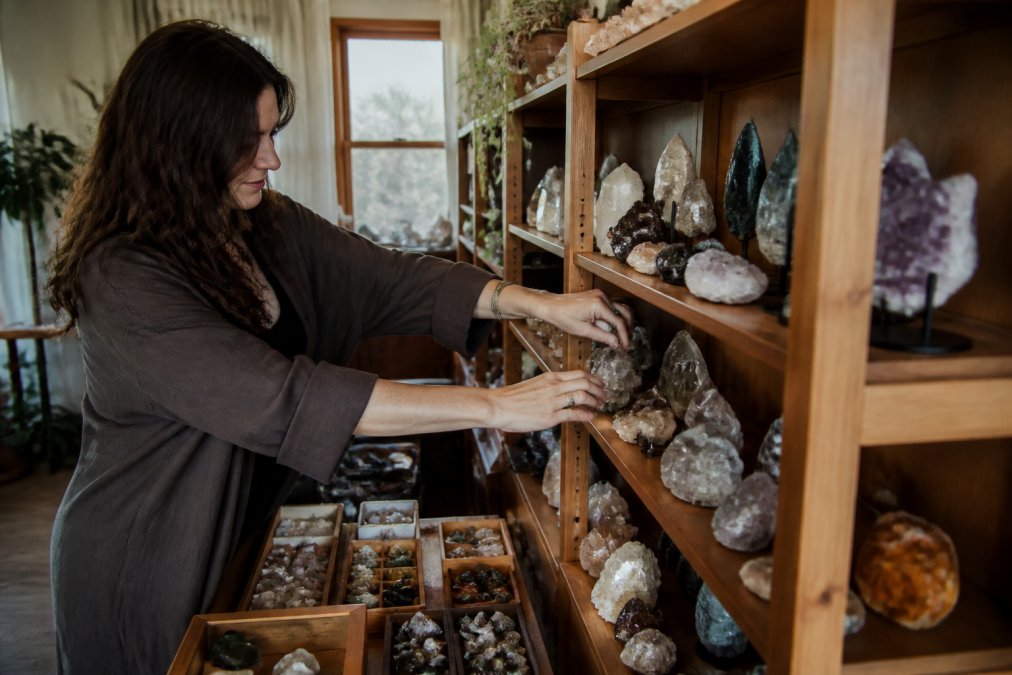
- Buy directly from the founder's own store instead of a marketplace that takes a cut.
- Leave detailed reviews. Specific feedback on packaging, accuracy, and shipping helps small shops more than a five-star rating alone.
- Ask about accommodations, then honor them. If a founder prefers email over phone calls, use email.
- Pay full price. Discount demands squeeze the smallest operations hardest.
- Recommend them by name to friends, not just with a generic share.
- Be patient with timelines during peak seasons when one person handles everything.
Cognitive Diversity as an Innovation Driver in Small Business
Cognitive diversity is the presence of different thinking styles, sensory profiles, and problem-solving approaches within one team or business. In a small company, that variety often decides whether a product feels generic or genuinely original.
| Strength | How It Shows Up | What It Means for Buyers |
|---|---|---|
| Pattern recognition | Spots unusual formations quickly | Distinctive, one-of-a-kind inventory |
| Deep focus | Long hours on detail work | Careful inspection before shipping |
| Direct communication | Clear, factual product answers | Fewer surprises on arrival |
| Systems thinking | Efficient solo operations | Reliable packaging and tracking |
Long-Term Career Growth and Intersectionality in Neurodivergent Entrepreneurship
Most coverage of neurodiversity at work stops at hiring. That is the gap this section is built to close. Career development in neurodivergent entrepreneurship rarely follows a straight line, and the same is true for the people these founders employ. Many founders build a business after years of underemployment, then reinvest profits into skills, equipment, and staff who need flexible schedules, which means the business itself becomes the career pathway that the traditional labor market denied them.
Golden Fluorite Elephant Carving | Hand →
Long-term pathways tend to look like this:
-
Year one: steady sales and a repeat customer base. The founder is the entire operation, and the goal is a predictable monthly floor, not a spike.
-
Year two: hiring one or two people, often from the same community. This is where flexible scheduling, written instructions, and clear task ownership start to matter more than any perk.
-
Year three and beyond: mentoring other founders and formalizing training. The business becomes a pipeline, not just a job.
-
Give instructions in writing when the task is multi-step, and confirm understanding without demanding eye contact.
-
Offer a quiet space or a heads-down block for focused work, and protect it on the calendar.
-
Separate feedback about the work from feedback about social style.
-
Ask about accommodations once, honor them consistently, and revisit them at review time rather than only at onboarding.
-
Promote on demonstrated output, not on visibility in meetings.
Repeat business beats a one-time gesture. Every reorder funds the next step, a new hire, a training hour, a piece of equipment, and it does so without asking the founder to spend energy on the pitch. That is the difference between supporting a neurodivergent-led business and simply buying from one.
Conclusion
The hard part is not knowing that supporting neurodivergent led businesses matters. It is turning that belief into a habit: buying direct, paying full price, and coming back. IG Crystal Archive, LLC was built around that idea, with hand-selected specimens, careful quality inspection, secure professional packaging, and a mission to support autistic adults and their families. Every order ships with a 30-day free return window, so you can choose a piece like the Natural Agate Geode Turtle Carving at $89.00 with no risk.

Frequently Asked Questions
What are the economic benefits of supporting neurodivergent entrepreneurs?
Neurodivergent entrepreneurs often build lean, focused businesses that create jobs and keep spending within local communities. Because many operate small, mission-driven shops, a larger share of revenue stays in the business and supports the founder's household rather than flowing to distant shareholders. This can strengthen local economies and expand the range of products and services available to consumers who want something different from mass-market options.
How can consumers identify neurodivergent-led businesses?
Look for businesses that openly share their mission and founder story on their website or social media. Many neurodivergent-led companies state their commitment to hiring or supporting neurodivergent individuals, publish details about their production process, and answer questions about their practices directly. You can also check whether they partner with autism or neurodiversity organizations, or whether their About page explains how the business came to be.
What challenges do neurodivergent business owners face in the current market?
Common challenges include difficulty accessing startup capital, navigating networking events that are not designed for different communication styles, and managing sensory or executive-function demands alongside day-to-day operations. Many also face bias during hiring or vendor negotiations. These barriers can slow growth, which is why conscious consumer support and inclusive hiring practices matter for keeping these businesses viable.
How does supporting neurodivergent led businesses benefit the broader community?
When neurodivergent founders succeed, they create jobs, mentor other neurodivergent workers, and often donate to or partner with disability-focused organizations. Their visibility also reduces stigma by showing that cognitive diversity is an asset in business. Over time, this can lead to more inclusive workplace cultures and a wider range of products designed with different needs in mind, benefiting customers well beyond the neurodivergent community.