Natural vs Dyed Agate: How to Identify Real Stones
Table of Contents
- What Agate Is and How It Forms
- Natural Agate Colors and What They Tell You
- How to Tell If Agate Is Dyed: Visual Inspection Steps
- How to Identify Agate Stone by Type and Origin
- How to Tell If Moss Agate Is Real
- The Limits of Home Identification and When to Seek a Gemologist
- Treatment Disclosure, Value, and Care
- Frequently Asked Questions
Last Updated: October 17, 2026
What Agate Is and How It Forms
Agate is a microcrystalline quartz that forms as silica-rich fluids slowly deposit layer upon layer of chalcedony in cavities within host rock, creating the banded patterns and color zones that make it visually striking. These natural agate colors reflect the mineral environment where the stone formed.
Dyed agate identification begins with understanding how agate forms naturally, the first step toward spotting treatments and dyes. Banding patterns, mineral inclusions, and color distribution all reflect authentic geological conditions, so recognizing what natural agate looks like makes identifying dyed specimens significantly easier.
Because agate forms slowly, natural specimens carry subtle variations: slight shifts in color saturation, uneven tone distribution, and organic-looking banding. Learn to recognize these before evaluating whether a stone has been artificially enhanced.
Natural Agate Colors and What They Tell You
Natural agate colors range from soft pastels to deep earthy tones, depending on the host rock's mineral content.
Natural agate rarely displays uniform, vibrant saturation across the entire stone. Instead you'll see color variation, deeper tones next to lighter zones, gradual transitions between hues, and subtle shifts in intensity, uneven distribution is actually a sign of authenticity.
Banded agate shows concentric rings of color that form as conditions in the host rock fluctuated over time. The bands vary slightly in width, tone, and intensity, that natural inconsistency makes each specimen unique and makes dyed agate stand out once you know what to look for.

When examining a piece claiming to be natural agate, ask: do the colors look like they belong together, and do the color zones follow the natural banding pattern? Natural coloration flows with the stone's structure; artificial dye often sits on the surface or concentrates in unexpected places.
How to Tell If Agate Is Dyed: Visual Inspection Steps
Dyed agate identification starts with close visual inspection under good lighting, checking for specific clues that reveal artificial color treatment.
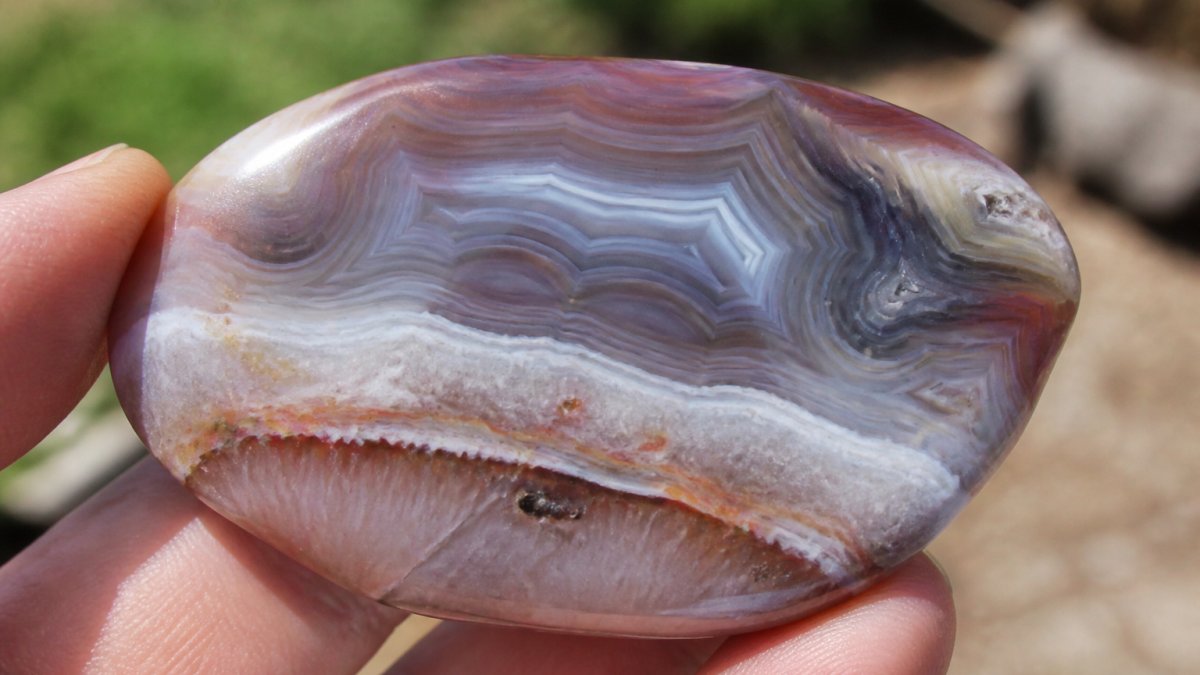
Check for Dye Concentration Around Cracks and Drilled Holes
This is the most reliable visual test for dye identification. Dyed agate absorbs color unevenly, concentrating most heavily where the stone is porous or compromised. Look closely at cracks, fractures, or drilled holes (especially around drill sites for pendants); noticeably darker or more saturated color pooling around these points strongly indicates artificial dyeing.
Natural agate doesn't show this pattern: its mineral composition determines color throughout, so cracks and holes don't create concentration zones. If the area around damage is a different color from the rest of the stone, suspect treatment.
Run your fingernail gently over the surface near cracks or holes. If you feel dye residue or the color seems to sit on top of the surface rather than within the stone, you've found evidence of dyeing, since dye particles accumulate on the surface and around damage points.
Examine Color Saturation and Uniformity
In bright light, observe overall color saturation. Natural agate shows varying intensity, some areas more saturated, others lighter, with gradual transitions that follow the natural banding pattern.
Dyed agate often displays unnaturally uniform saturation across large areas, looking painted on rather than integral. That uniformity contradicts how natural color forms: dye creates consistent coverage rather than the organic variation of genuine specimens.
Compare saturation at the center versus the edges. Natural agate shows subtle shifts; dyed agate often appears equally intense throughout, a red flag, since dye doesn't follow the gradient formed during crystallization.
Look for Unnatural Color Zones and Banding
Examine the banding closely. Natural agate banding follows the concentric structure created during formation, with bands irregular in width and intensity that flow naturally around the stone's shape.
Unnatural color zones appear when dye is applied selectively or the stone is partially treated: a sharp boundary between a deeply colored area and a lighter one, or color that doesn't align with the banding structure. These boundaries look artificial because they don't follow the stone's geological logic.
Some dyers target specific areas, deepening color in banded zones while leaving others lighter. The result looks intentional rather than natural: zones too distinct, too evenly colored, or too perfectly defined compared with the subtle, organic transitions in untreated agate.
How to Identify Agate Stone by Type and Origin
Different agate varieties have distinct natural characteristics; learning them helps you spot when a specimen has been altered.
Flower Agate and Its Natural Patterns
Flower agate displays floral-like patterns created by mineral inclusions and banding. The "flowers" are typically soft, muted creams, pale pinks, and pale greens against neutral gray or white backgrounds, forming organically, never perfectly symmetrical or too vivid.
When flower agate is dyed, artificial colors overwhelm the delicate pattern: the background becomes too uniform or the floral zones unnaturally vibrant. Natural flower agate looks gentle; dyed versions can look garish by comparison.
Our White Flower Agate Tower features the soft, natural coloration you should expect, creamy whites, pale grays, and earthy browns with subtle mineral details. The floral patterns are visible but understated, exactly as they appear in untreated specimens.

Moss Agate: Chlorite and Mineral Inclusions
Moss agate contains visible mineral inclusions resembling moss or plant-like formations, typically green (from chlorite) or brown, embedded in a translucent to opaque white or gray base stone. The inclusions are organic and irregular in shape and distribution.
Dyed moss agate often shows unnaturally vivid green in the inclusions or background, exceeding natural saturation. The color may also appear on the surface around cracks rather than integrated throughout the mineral structure.
White Flower Agate Tower 6” | Natural Druzy Agate Crystal Point | Polished →
Genuine moss agate, like our Natural Moss Agate Crystal Tower, displays deep forest green tones with white mineral inclusions that look naturally embedded. The coloration is rich but not artificial-looking; it reflects the mineral content of the stone itself.
Banded Agate and Color Distribution
Banded agate shows concentric rings created by alternating layers of different mineral compositions. Natural banded agate displays subtle color variation within each band, slight shifts in tone, occasional irregularities in width, and organic rather than rigid transitions.
When examining banded agate for dye treatment, note how sharply defined the bands are. Natural bands have soft edges; dyed bands sometimes show crisp, painted-on boundaries. Color within each band should vary slightly, uniform color across an entire band suggests artificial enhancement.
Our Large Banded Agate Sphere with Druzy showcases authentic banding, flowing layers of soft gray, creamy white, and warm caramel that wrap naturally around the sphere. The bands vary in width and intensity, and the natural druzy pocket adds genuine geological character that no dye treatment could replicate.
How to Tell If Moss Agate Is Real
Moss agate authenticity hinges on two factors: the appearance of the inclusions and overall color integration.

Run your finger over the surface. If you feel texture or residue around the inclusions, or the color seems to sit on top of the stone rather than within it, suspect dyeing. Genuine moss agate feels smooth and integrated.
Under magnification, real chlorite inclusions have irregular, organic shapes resembling actual plant matter. Dyed specimens sometimes show color pooling unnaturally around these formations; the color should be consistent with the mineral's natural state, not suspiciously vivid or uniform.
Check the base stone color too. The matrix surrounding the inclusions should be neutral white, gray, or pale brown. If the base is dyed to match or enhance the inclusion color, you'll see the uniform saturation that signals artificial treatment.
The Limits of Home Identification and When to Seek a Gemologist
Home inspection can reveal many signs of dye treatment, but it has real limits: visual and tactile tests catch obvious cases, while subtle treatments may not be detectable without specialized equipment.
Some dyes are applied at high temperatures and integrate so thoroughly that surface inspection won't reveal them; other treatments coat the stone with resin or sealants that hide the evidence (gia.edu). A professional gemologist with spectroscopy or microscopic analysis can provide definitive answers.
If you're investing in a significant piece or the seller's claims seem questionable, professional verification is worth the cost: a gemologist can test for specific dyes, examine the stone under magnification, and provide documentation of authenticity.
When purchasing from reputable sources like IG Crystal Archive, the curation process itself serves as a quality filter. Each piece is personally selected and carefully inspected for authenticity before it reaches you.
Treatment Disclosure, Value, and Care
Treated agate is not worthless, but it is less valuable than untreated specimens, and buyers deserve to know the difference.
Natural, untreated agate retains value because it represents the stone in its authentic geological state. Dyed agate is often priced lower, which is appropriate; the problem is dyed stones sold as natural without disclosure.
Care for natural and dyed agate similarly: keep both away from prolonged direct sunlight, which can fade color, and clean gently with lukewarm water and mild soap.
Store agate away from extreme temperature changes and moisture. For dyed pieces, avoid prolonged water exposure, which can leach color; natural agate is more stable and forgiving.
When you purchase agate, whether natural or treated, you're investing in a piece of Earth's geological history. That value deserves respect, which is why knowing what you own, and whether it's been altered, matters.
| Identification Method | What to Look For | Indicates Dyed Agate | Indicates Natural Agate |
|---|---|---|---|
| Dye Concentration Around Cracks | Color pooling or saturation near damage points | Dark concentration around holes or fractures | Even color distribution; no concentration zones |
| Color Saturation | Uniformity across large areas | Unnaturally consistent color throughout | Subtle variation in intensity; organic gradients |
| Color Zones and Banding | Boundary sharpness and alignment with structure | Sharp, artificial-looking boundaries; color misaligned with bands | Soft transitions; color follows natural banding |
| Surface Texture | Residue or painted-on appearance | Dye sits on surface; tactile residue present | Smooth, integrated; color is internal |
| Inclusions (Moss Agate) | Chlorite appearance and color saturation | Vivid, uniform green; color pooling around inclusions | Organic, irregular formations; natural saturation |
Identifying natural versus dyed agate is a learnable skill that protects your investment and ensures you're getting what you pay for.
At IG Crystal Archive, every piece in our collection has been personally selected and carefully inspected for quality and authenticity. Our 30-day free returns and fast, reliable shipping mean you can shop with confidence, knowing that each stone meets our standards for genuine beauty. Shop Crystals and discover hand-selected agate specimens that reflect nature's true artistry, backed by our commitment to quality and our mission to support autistic adults and their families with every purchase.
Frequently Asked Questions
Can dyed agate still be real agate?
Yes. Dyed agate is still genuine agate stone, the dyeing is a treatment applied after the stone forms, not a replacement of the mineral. However, treatment should be disclosed, as it affects value and longevity. Many collectors prefer all-natural, untreated specimens for authenticity and investment purposes. When shopping, ask sellers whether their agate is natural or enhanced; reputable dealers like IG Crystal Archive clearly identify treatment status.
What does unusually bright color mean in agate?
Unusually vibrant or uniform color, especially hot pink, intense green, or saturated red, often signals dye treatment. Natural agate displays subtle color gradation, softer tones, and uneven distribution. Dyed agate typically shows uniform, vivid saturation throughout. However, some natural agates do have rich color; the key is checking for dye concentration in cracks and around drilled holes, which reveals whether color penetrates unevenly or pools in damage.
How do I identify moss agate and confirm it's real?
Real moss agate contains chlorite or manganese oxide mineral inclusions that create moss-like or landscape-like patterns. These inclusions appear organic and three-dimensional, visible from multiple angles. Dyed moss agate shows uniform green color without realistic inclusion depth. Look for natural variation in tone, subtle color zones, and patterns that resemble actual moss or foliage formations. The Natural Moss Agate Crystal Tower from IG Crystal Archive exemplifies authentic moss agate with deep forest green tones and white natural inclusions throughout.
What tests should I avoid when checking if agate is dyed?
Avoid water or wet-cloth tests, as they can damage the stone or spread dye. Never use harsh chemicals or acids. Do not attempt to scrape or scratch the surface to test color stability. Safe methods include close visual inspection under bright light, examining cracks and drilled holes for dye pooling, and checking color uniformity with a magnifying glass. When in doubt, consult a certified gemologist rather than risk damaging an authentic specimen.