Crystabelle Alternatives for Mineral Collectors
Table of Contents
- Why Mineral Collectors Look Beyond Crystabelle
- How to Evaluate a Crystal Seller
- Where to Buy Authentic Mineral Specimens Online
- Understanding Authentic Mineral Specimens
- Specimen Quality and Collector Grade Explained
- Popular Mineral Species for Collectors
- Building Your Collection With Purpose
- Frequently Asked Questions
Last Updated: October 10, 2026
Why Mineral Collectors Look Beyond Crystabelle
Mineral collectors increasingly seek Crystabelle alternative for mineral collectors sources that offer transparency, rigorous curation, and specimen verification that generic online marketplaces lack.
Collectors turn to alternatives for hand-selected pieces with documented quality, sellers who verify authenticity, and confidence that purchases align with their values.
The distinction between retailers lies in curation philosophy: some stock whatever moves inventory, while others personally select pieces for quality and collector appeal. This guide helps you evaluate sellers, understand specimen value, and find authentic sources.
How to Evaluate a Crystal Seller
Evaluating a mineral seller requires assessing trustworthiness, specimen accuracy, and alignment with your standards. The market includes reputable curators, commodity retailers, and opportunistic resellers; distinguishing between them protects your investment.
Verification and Provenance Standards
A reliable seller documents what they know and acknowledges what they don't. Look for specificity: "Identified as Malachite based on color, banding pattern, and hardness testing" rather than unsupported labels.
Ask sellers about specimen origin: the mine, region, previous collection, or acquisition timeframe. Sellers who trace material to source demonstrate accountability; those unable to answer basic origin questions warrant caution, especially for high-value specimens.
Treatment Disclosure and Condition Honesty
Ethical sellers disclose treatments explicitly: heat treatment, polishing, coating, or mounting. Describing a quartz cluster as "natural, untreated" versus "heat-treated for color enhancement" demonstrates the difference between transparency and misrepresentation.
Condition descriptions should match reality. Phrases like "minor surface wear consistent with age" or "small chip on lower edge" show critical examination. Claims of perfection or vague language like "beautiful condition" warrant skepticism.
Return Policies and Shipping Practices
Professional packaging is non-negotiable: padded boxes, protective wrapping, and cushioning. Reputable sellers establish 30-day return windows for inspection. Sellers refusing returns for specimens that don't match descriptions prioritize sales over confidence.
Sellers who provide tracking and ship within stated timeframes demonstrate reliability. Delays without communication or unresolved lost packages indicate operational problems.
Customer Feedback and Collector Community Signals
Read reviews for accuracy and authenticity concerns. Look for patterns: Do buyers report specimens differing from descriptions? Is the seller responsive? Did specimens arrive safely?
Engage with mineral collecting communities online to ask about seller reputation. Experienced collectors can identify which sellers consistently deliver quality. Strong community standing indicates earned trust.
Red Flags and Caution Signals
Avoid sellers with extremely low prices for rare specimens (indicating misidentification or damage), those refusing origin/treatment questions, or those with no return policy. These signal profit prioritization over customer satisfaction.
Beware of sellers using only filtered photos or refusing multiple angles and close-ups. Professional retailers show specimens as they appear, including imperfections. Hidden details often conceal condition issues or misidentifications.
Where to Buy Authentic Mineral Specimens Online
Finding authentic specimens depends on matching your goals, budget, and preferences with the right source.
Curated Boutique Sources for Quality-Focused Collectors
Hand-selected retailers specialize in personally examined specimens chosen for exceptional quality. These sources stock 50-500 pieces, allowing rigorous quality standards. Each specimen is inspected for color, crystal formation, damage, and visual impact.
Curated retailers offer detailed descriptions, multiple photos, 30-day returns, and responsive service. The trade-off is limited inventory; pieces may not be restocked and selection rotates frequently.
Specialty Mineral Dealers for Focused Collectors
Specialty dealers concentrate on particular mineral species, geographic origins, or grades. A quartz specialist might stock smoky quartz, citrine, amethyst, and treated varieties in depth.
These sources appeal to intermediate and advanced collectors building depth. They offer expert knowledge and educational content. Prices vary: common specimens $20-$100, rare pieces $500+.
General Crystal Retailers for Beginners and Budget-Conscious Collectors
General retailers stock diverse species at $10-$150 per specimen, appealing to beginners and budget-conscious collectors. Inventory is large (1,000+ pieces) with multiple options for common species.
The trade-off is variable curation quality. Descriptions may be brief, photos lack detail, and return policies vary. Customer reviews are essential, as quality consistency is less guaranteed than at curated sources.
Natural Pyrite Crystal Druzy Freeform | Metallic Cubic Crystal Cluster →
Marketplace Platforms and Reseller Networks
Marketplaces offer enormous selection and price competition, but verification becomes your responsibility. Prices range $15-$200 depending on seller and quality.
Marketplace purchases require careful photo inspection, detailed description reading, and attention to policies. Shipping varies 2-14 days; returns depend on individual sellers. These sources require more due diligence than established retailers.
Comparison by Collector Type and Budget
| Collector Profile | Recommended Source Type | Why | Typical Price Range | Key Consideration |
|---|---|---|---|---|
| Beginner, learning identification | General retailer or educational specialty dealer | Affordable variety, learning resources | $20-$80 per piece | Prioritize clear descriptions and return policies |
| Budget-conscious, building volume | Marketplace platforms, general retailers | Price competition, large selection | $15-$60 per piece | Verify seller ratings and read reviews carefully |
| Intermediate, building specialty focus | Specialty mineral dealer | Deep selection in focus area, expert knowledge | $50-$300 per piece | Confirm dealer expertise in your preferred minerals |
| Established, seeking investment-grade or rare specimens | Curated boutiques, premium specialty dealers | Rigorous quality standards, provenance documentation | $150-$1,000+ per piece | Verify authentication and treatment disclosure |
| Collector seeking ethical sourcing or mission alignment | Curated boutiques with stated values | Transparency about sourcing and business practices | $50-$300 per piece | Research seller's sourcing practices and community reputation |
Evaluating Seller Verification and Trustworthiness
Assess seller credibility through consistent signals: detailed policies, clear contact information, verifiable registration, 24-48 hour responses, specific answers, and prominent testimonials including addressed critical feedback.
Sellers providing identification based on clear criteria (color, hardness, crystal form, testing) demonstrate expertise. Those acknowledging uncertainty show integrity. Vague claims or refusal to answer origin/treatment questions warrant caution.
Check seller consistency: 3+ years at same storefront with thousands of positive reviews indicates built reputation. Minimal history, inconsistent descriptions, or frequent policy changes present higher risk.
Understanding Authentic Mineral Specimens
Authentic specimens retain natural character while being properly preserved. Authenticity doesn't mean "untouched", many are polished or mounted. It means honest representation of what the specimen is, its condition, and any modifications.
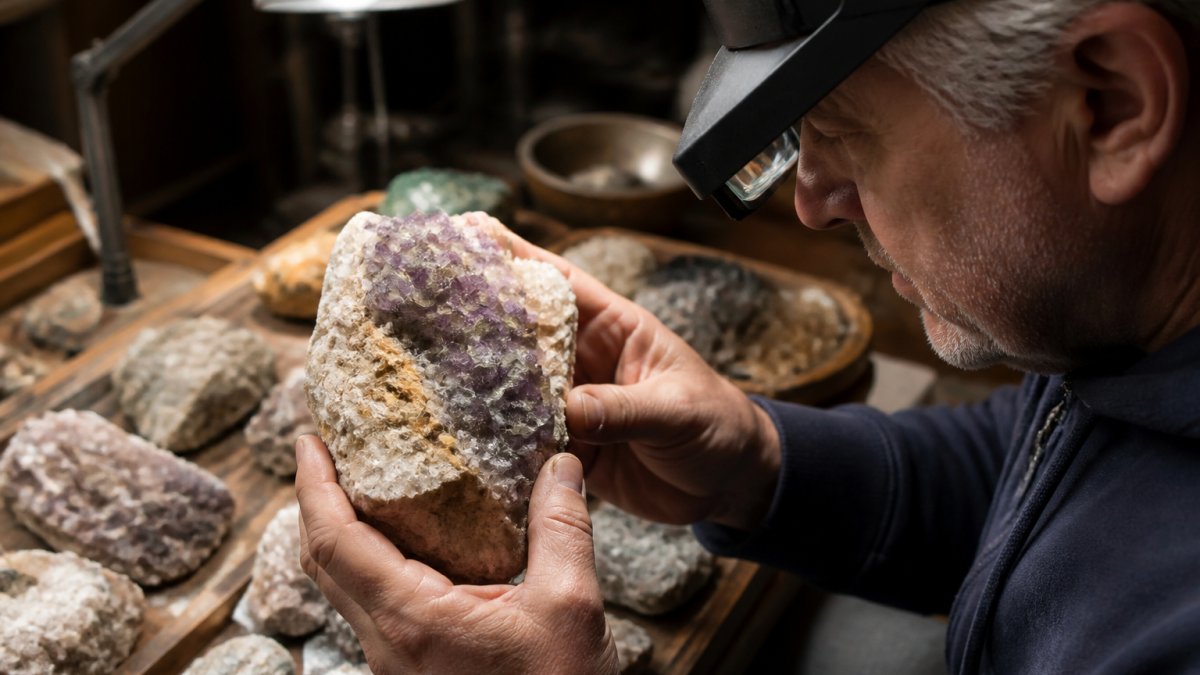
Natural variations are part of authenticity. Real crystals have inclusions and irregularities. Artificially perfect specimens may be heavily treated. Collectors seeking authentic pieces appreciate natural character as evidence of genuineness.
Documentation supports authenticity claims. Reputable sellers provide mineral identification based on appearance or supplier information, acknowledge the limits of their identification, and explain their basis for classification. This transparency builds confidence that you're purchasing what you believe you're purchasing.
Specimen Quality and Collector Grade Explained
Specimen quality encompasses several dimensions: color intensity, crystal clarity, size, formation type, and overall visual impact. Collector grade refers to specimens selected for aesthetic appeal and collection value rather than industrial use.
Collector-grade specimens typically feature well-formed crystals with good color saturation, minimal damage, and striking visual presence. A collector-grade pyrite cluster displays cubic crystal formations clearly, with metallic luster and geometric perfection. A collector-grade malachite specimen showcases the mineral's characteristic banded patterns and botryoidal formations prominently.
Size matters contextually. Some collectors prize small, perfectly formed specimens; others seek large statement pieces. The Natural Pyrite Crystal Druzy Freeform at 2.5 inches tall serves collectors wanting a focused, detailed piece, while the Natural Malachite Botryoidal Mineral Specimen at approximately 4 inches wide appeals to collectors building impressive display collections.

Rarity influences value significantly. Common minerals like quartz appear in countless forms; rare specimens or unusual formations command higher prices. A Titanium Aura Quartz Cluster with its iridescent rainbow druzy texture represents a more specialized offering than basic quartz varieties.
Popular Mineral Species for Collectors
Certain mineral species appear consistently in serious collections because they offer visual appeal, availability, and collecting satisfaction. Pyrite attracts collectors with its metallic cubic formations and striking geometric perfection. Specimens like the Natural Pyrite Crystal Druzy Freeform showcase why pyrite commands collector interest, the polished base contrasts beautifully with raw druzy surfaces, creating visual depth.
Malachite appeals to collectors seeking rich color and distinctive banding patterns. The mineral's characteristic green shades and botryoidal formations make each specimen unique. The Natural Malachite Botryoidal Mineral Specimen demonstrates why collectors value this species, its textured surface reveals natural formations that polished carvings cannot.

Celestite attracts collectors with its delicate blue crystals and ethereal appearance. The Natural Blue Celestite Crystal Cluster on Silver Stand combines collector appeal with display-ready presentation, making it accessible to collectors at various experience levels.
Quartz varieties, including smoky quartz and treated varieties like Titanium Aura Quartz, remain foundational to most collections. These specimens range from subtle to dramatic. The Natural Smoky Quartz Crystal Cluster offers deep translucency and natural terminations, while the Titanium Aura Quartz Cluster delivers bold iridescent drama for collectors seeking statement pieces.
Building Your Collection With Purpose
Intentional collection building transforms mineral acquisition from random purchasing into a coherent, meaningful pursuit. Start by identifying what draws you to minerals. Do you appreciate geometric crystal formations? Color gradations? Specific mineral species? Rarity? Your personal preferences should guide selection.
Establish realistic goals. Beginning collectors might focus on learning mineral identification through a core set of common species. Intermediate collectors often specialize, pursuing specific minerals or geographic origins. Established collectors frequently balance building depth in preferred areas with acquiring exceptional pieces that catch their eye.
Quality over quantity creates more satisfying collections. Five carefully selected, well-displayed specimens that you genuinely love will bring more joy than twenty mediocre pieces crowding shelves. Each addition should earn its place through genuine appeal or collection significance.
Display considerations influence purchasing decisions. Consider how specimens will be positioned, on shelves, in cabinets, or as focal points. The Natural Blue Celestite on its silver stand works beautifully as a standalone display piece, while the Natural Smoky Quartz Cluster rewards examination from multiple angles on an open shelf.
| Collection Stage | Focus | Example Approach | Typical Budget |
|---|---|---|---|
| Beginning | Learning & core species | 5-10 common minerals | $50-150 total |
| Intermediate | Specialization & quality | 15-30 pieces in preferred areas | $300-800 total |
| Established | Depth & exceptional finds | 50+ pieces with strategic additions | $1,000+ ongoing |
Building a meaningful mineral collection requires finding sellers who share your values about quality, authenticity, and purpose. IG Crystal Archive combines hand-selected curation with a mission supporting autistic adults and their families, ensuring every purchase reflects both collector values and social commitment. Our specimens, from the striking Natural Pyrite Crystal Druzy Freeform to the dramatic Titanium Aura Quartz Cluster, are personally chosen for exceptional quality and natural beauty. Learn more about ethical mineral sourcing practices and how to evaluate specimens confidently. Shop Crystals with IG Crystal Archive and build a collection that matters.
Frequently Asked Questions
How can I tell whether a mineral specimen is authentic?
Authentic mineral specimens show natural characteristics: varied surface textures, irregular crystal formations, inclusions, and color variations. Reputable sellers provide detailed photos from multiple angles and disclose whether a piece has been treated or polished. Ask sellers about their sourcing and inspection process. Red flags include suspiciously uniform appearance, overly perfect formations, or vague descriptions. Trustworthy retailers like IG Crystal Archive personally inspect each specimen and provide exact photos of the piece you'll receive.
What should mineral collectors look for when buying specimens online?
Prioritize sellers who provide exact photos of the specific piece you're purchasing, clear measurements, and transparent sourcing information. Evaluate their return policy, shipping methods, and customer reviews. Look for hand-selected curation rather than mass inventory. Check whether they describe specimen condition honestly, including any natural imperfections. Mission-driven sellers who support communities or causes often demonstrate higher accountability. Verify they offer secure packaging and stand behind their authenticity claims.
How do I compare mineral sellers before making a purchase?
Create a checklist: specimen authenticity verification, pricing transparency, return policies, shipping speed and packaging quality, customer testimonials, and seller background. Compare how sellers describe their curation process and whether they explain why each piece matters. Check response times to questions about provenance and condition. Evaluate their social mission or business values if that matters to you. Read verified buyer reviews specifically about specimen accuracy and quality upon arrival. Sellers who invest in detailed descriptions and customer communication typically deliver better experiences.
What makes a mineral specimen collector grade versus investment grade?
Collector-grade specimens are high-quality pieces valued for their beauty, rarity, and display appeal, typically ranging from $50-$200. Investment-grade specimens command higher prices due to exceptional rarity, flawless condition, significant size, or historical provenance, often exceeding $500. Beginners typically start with collector-grade specimens to build their collection without major financial commitment. Investment-grade pieces require expert authentication and deeper market knowledge. Both grades should show natural crystal formations, authentic color, and excellent preservation. Your collecting goals and budget determine which grade suits you best.