Best Places to Buy Authentic Crystals in 2026
Table of Contents
- What Makes a Source Trustworthy for Authentic Crystals
- How to Identify Fake Crystals Before You Buy
- Ethical Crystal Sourcing: Why It Matters and What to Ask
- Best Online Crystal Shops for Beginners and Collectors
- Shipping, Returns, and Buying Authentic Crystals Online Safely
- Metaphysical Properties and Mineral Grades: Matching the Right Stone to Your Needs
- Frequently Asked Questions
Last Updated: September 2, 2026
Finding the best places to buy authentic crystals is harder than it looks. The market is flooded with dyed tumbled stones, synthetic imitations, and specimens with no sourcing disclosure. At IG Crystal Archive, we've spent years curating hand-selected geological specimens because we know how easy it is to end up with a fake. This guide gives you a practical framework for identifying genuine minerals, avoiding counterfeits, and shopping with confidence.
Quick Picks:
- Best Overall: IG Crystal Archive, hand-selected specimens, 30-day free returns, mission-driven
- Best for Collectors: Regional mineral shows and gem fairs, direct access to verified specimens
- Best for Research: Established online marketplaces with seller ratings and return policies
A trustworthy source and an educated eye work together. Most guides focus on where to buy without telling you how to verify what you're buying.
What Makes a Source Trustworthy for Authentic Crystals
A trustworthy crystal source traces each specimen from geological origin to your hands, discloses treatments openly, and stands behind its products with a clear return policy. Fewer sellers meet all three criteria than you'd expect.
Supply Chain Transparency and Sourcing Disclosure
Ethical sourcing starts with supply chain transparency. A seller who can tell you a specimen's country of origin, the mine or region it came from, and whether it has been heat-treated or dyed operates at a fundamentally different standard than one who lists only "natural quartz."
Ask these questions before you buy:
- Where was this specimen mined or sourced?
- Has it been heat-treated, irradiated, or dyed?
- Is the seller working directly with miners or through intermediaries?
- Does the listing describe natural inclusions, matrix, or other geological characteristics?
The Gemological Institute of America's resource on gem treatments outlines common treatments applied to minerals, including heat treatment of amethyst and quartz, which can alter color and perceived value. A seller who proactively discloses these treatments demonstrates integrity.
Quality Assurance: Hand-Selected vs. Bulk-Sourced Specimens
Hand-selected specimens are evaluated one by one for structural integrity, natural inclusions, and visual quality. Bulk-sourced lots are purchased by weight or volume without individual inspection. This distinction matters enormously for collectors and anyone buying a crystal as a statement piece or gift.
What hand-selection means in practice:
- Each piece is examined for structural integrity and visual quality
- Mislabeled or low-grade specimens are removed before listing
- Unique characteristics like rainbow flashes or druzy formations are noted
- Photos show the exact piece you will receive, not a representative sample
How to Identify Fake Crystals Before You Buy
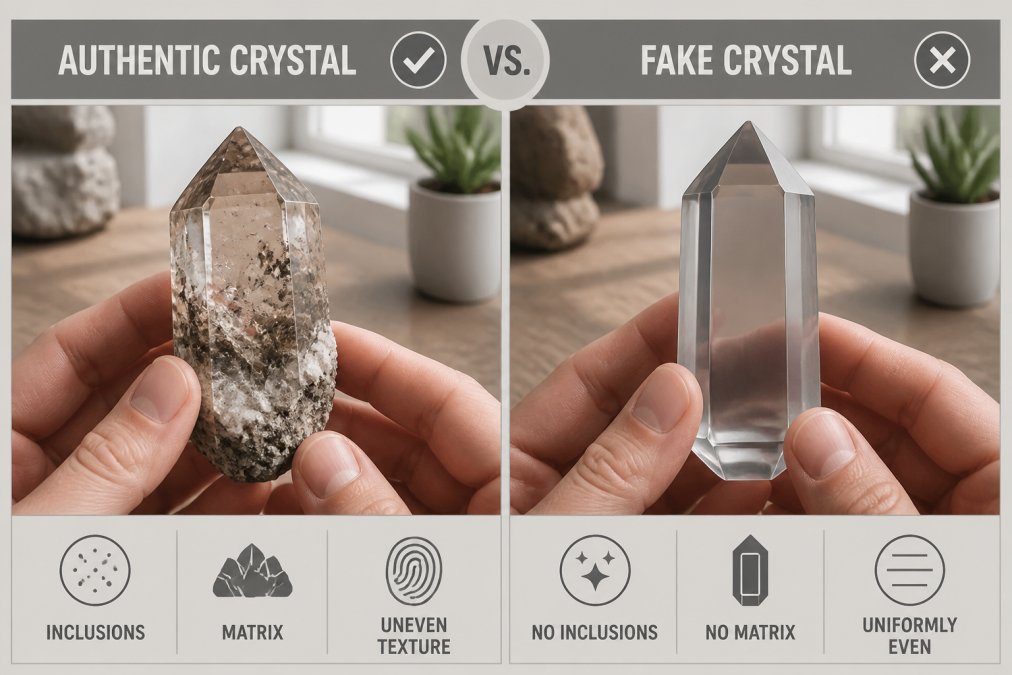
Fake crystals fall into three categories: completely synthetic imitations, genuine minerals artificially altered, and correctly identified minerals misrepresented as something rarer or more valuable.
Physical and Scientific Verification Methods
Physical tests you can do at home:
- Temperature test: Genuine crystals, especially quartz, feel noticeably cool to the touch. Glass and plastic imitations warm up quickly.
- Hardness test: According to the Mineralogical Society of America's guide to mineral properties, quartz registers 7 on the Mohs hardness scale and will scratch glass. Most glass and plastic fakes will not.
- Inclusions and natural variation: Authentic crystals contain natural inclusions, internal fractures, and mineral deposits. Perfectly uniform, bubble-free specimens are often glass or synthetic resin.
- Weight: Natural crystals are denser than most imitations. A piece that feels surprisingly light for its size warrants scrutiny.
Scientific verification methods:
- Refractometry: Measures how light bends through a stone. Each mineral has a specific refractive index.
- Specific gravity testing: Measures density relative to water. Each mineral species has a characteristic specific gravity that synthetic imitations rarely match.
- UV fluorescence: Some minerals fluoresce under ultraviolet light in characteristic ways. Synthetic versions often do not.
For high-value collector specimens, a professional appraisal from a certified gemologist is worth the cost.
Red Flags: Dyed, Heat-Treated, and Lab-Created Stones
Not all treated stones are fraudulent, but undisclosed treatment is. Here's what to watch for:
| Treatment Type | How to Spot It | Disclosure Requirement |
|---|---|---|
| Dyed stones | Uneven color pooling in cracks, color bleeds onto cotton | Must be disclosed |
| Heat-treated quartz | Artificially vivid or uniform color, no natural zoning | Should be disclosed |
| Lab-created stones | Perfect clarity, no inclusions, unusually low price | Must be labeled synthetic |
| Glass imitations | Bubbles visible under magnification, warm to touch | Not a mineral at all |
| Aura-treated quartz | Metallic iridescent coating (titanium, gold vapor) | Should be disclosed as treated |
Aura quartz is genuine quartz bonded with titanium vapor to create an iridescent rainbow finish. This is a legitimate treatment provided it is disclosed. The base mineral is real; the coating is applied.

Ethical Crystal Sourcing: Why It Matters and What to Ask
Ethical crystal sourcing protects workers, minimizes environmental damage, and provides honest provenance information. The U.S. Geological Survey's overview of mineral commodities and mining documents the global scale of mineral extraction and the gap between large-scale industrial mining and small artisanal operations.
What separates ethical sourcing from marketing language:
- Worker conditions: Are miners paid fairly? Are unsafe conditions absent?
- Environmental impact: Is the mining site subject to reclamation requirements?
- Provenance honesty: Can the seller name the country, region, or mine?
- Sustainability certifications: Are suppliers audited by third parties?
Ask: "Can you tell me where this specific piece came from and why you selected it?" A seller who answers in detail operates with genuine transparency. Small, mission-driven shops are often better positioned on ethical sourcing than large wholesale operations because they buy in smaller quantities from known suppliers and inspect each piece personally.
Best Online Crystal Shops for Beginners and Collectors
The best online crystal shops show you the exact piece you will receive, disclose sourcing and treatment information, and offer a real return policy.
IG Crystal Archive: Hand-Selected Specimens with a Mission
IG Crystal Archive is our top pick for buying authentic crystals online. Every specimen is hand-selected and personally inspected before listing, you receive the exact piece pictured, and the shop backs every purchase with 30-day free returns.
What makes IG Crystal Archive stand out:
- Hand-selection and individual inspection: Each piece is evaluated for quality, natural character, and visual integrity before listing.
- Exact-piece photography: Listings show the actual specimen you'll receive, including natural inclusions and matrix.
- Transparent condition notes: Listings describe natural characteristics honestly, including minor surface imperfections.
- Mission-driven business: IG Crystal Archive supports autistic adults and their families. Verified buyer Jessica T. noted: "Knowing my purchase supports such a heartfelt mission made this crystal even more special."
- 30-day free returns and reliable shipping: Verified buyer Sarah M. confirmed: "The quality is incredible, and shipping was fast."
Highlighted pieces:
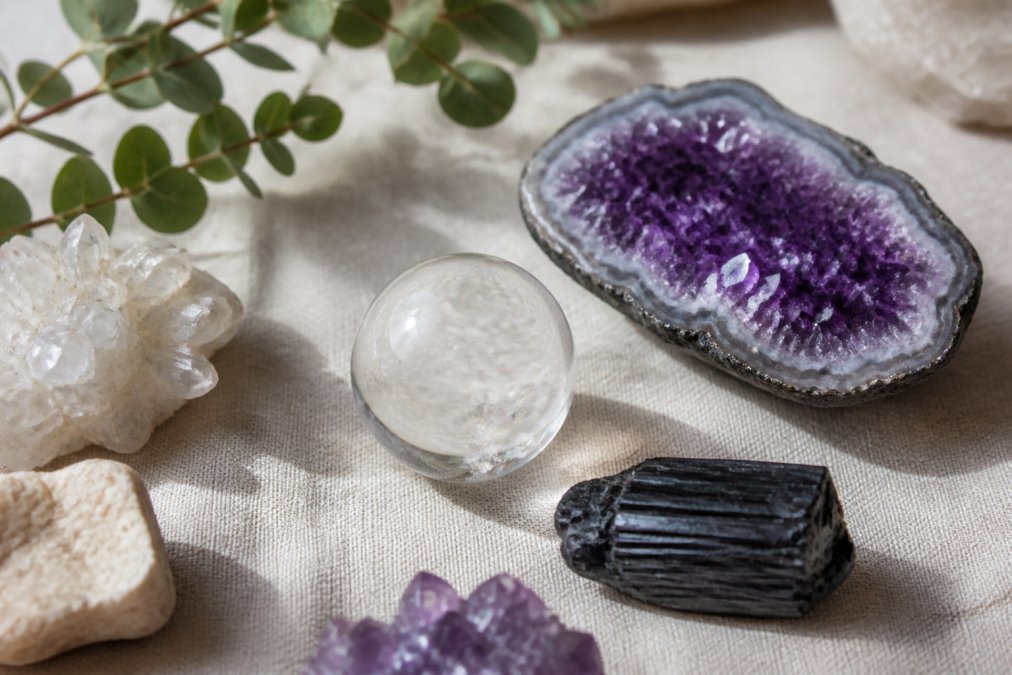
The Clear Quartz Crystal Sphere Set starts at $15.00 each with wooden display stands. Each sphere features natural inclusions and rainbow flashes confirming genuine quartz formation.

The Large Raw Black Tourmaline Chunk at $109.99 features natural vertical striations and raw, untouched form.

The Natural Amethyst Geode Sphere at $49.99 showcases a polished exterior with a raw druzy crystal interior.
Mineral Shows and Local Gem Fairs
Regional mineral shows and gem fairs are the best venues for hands-on verification. You can handle specimens directly, ask sellers face-to-face about sourcing, and apply physical tests on the spot.
The American Federation of Mineralogical Societies coordinates shows across the country. Dealers at established shows tend to be collectors and mineralogists themselves, making sourcing conversations substantive.
What to bring: a 10x loupe, a Mohs hardness reference card, a list of specimens you're seeking, and questions about provenance for pieces over a certain price threshold.
The limitation: pricing varies between vendors, and selection depends on who attends. They're excellent for collector-grade specimens but less reliable for consistent access to specific pieces.
Established Online Marketplaces: What to Watch For
Large online marketplaces host thousands of crystal sellers with varying quality. The platform provides no authentication; responsibility falls on individual sellers.
Markers of a trustworthy seller:
- Exact-piece photos with multiple angles
- Detailed condition descriptions including natural imperfections
- Disclosed treatment history
- A return policy with clear terms
- Seller history with verified reviews mentioning specific pieces
Red flags: stock photos, vague descriptions like "natural healing crystal," no mention of treatments, and return policies excluding "as described" items.
Shipping, Returns, and Buying Authentic Crystals Online Safely
Buying authentic crystals online safely requires understanding how fragile specimens are packaged and what recourse you have if something goes wrong.
What professional crystal packaging looks like:
Individual wrapping, adequate cushioning, and a structurally sound box are essential. IG Crystal Archive uses secure, professional packaging on every order.
Return policies: what to look for:
- A clearly stated window (30 days is standard)
- Coverage for "not as described" situations, not just damage claims
- A process that doesn't require proving fraud to get a refund
IG Crystal Archive offers 30-day free returns, meaningful in a market where many sellers disclaim all returns on "natural" items.
Safe online buying checklist:
- Seller shows exact piece in multiple photos
- Listing discloses any treatments or enhancements
- Return policy covers "not as described" scenarios
- Seller responds to sourcing questions with specific answers
- Payment method offers buyer protection
- Packaging description or reviews confirm professional handling
A seller's return policy reveals more about their confidence in their product than any listing description. A seller unwilling to accept returns on "natural" items isn't confident you'll agree with their description once the piece arrives.
Metaphysical Properties and Mineral Grades: Matching the Right Stone to Your Needs
Metaphysical properties and mineral grades are two separate frameworks often conflated.
Mineral grades are objective, describing specimen quality based on crystal clarity, formation completeness, size, matrix quality, and damage. A high-grade smoky quartz cluster like the Natural Smoky Quartz Crystal Cluster at $64.00 meets collector-grade standards because of its formation quality.
Metaphysical properties are healing and energetic qualities attributed to minerals within wellness traditions. Clear quartz is described as a "master healer" believed to amplify energy. Black tourmaline is associated with grounding and protection. Amethyst is linked to calm and clarity.
How to match a stone to your needs:
| Stone | Mineral Grade Consideration | Common Metaphysical Association | Best Format |
|---|---|---|---|
| Clear Quartz | Clarity, inclusion type, sphere uniformity | Energy amplification, clarity | Sphere, carved piece |
| Amethyst | Color depth, druzy density, geode formation | Calm, intuition, stress relief | Geode sphere, cluster |
| Black Tourmaline | Striation definition, raw vs. polished | Grounding, protection | Raw chunk |
| Smoky Quartz | Translucency, termination quality | Grounding, transmutation | Cluster, point |
| Titanium Aura Quartz | Base crystal quality, coating uniformity | Vitality, positive energy | Cluster, specimen |
You don't have to choose between geological accuracy and metaphysical interest. A specimen with strong geological character, natural inclusions, and honest provenance is a more meaningful object whether you're drawn to its vibration or its visual beauty.
Verified buyer Amanda L. said: "I've ordered crystals from many shops, and IG Crystal Archive stands out." That trust is built on the combination of quality, transparency, and care that separates genuine curation from volume retail.
Finding the best places to buy authentic crystals comes down to one question: does this seller know exactly what they're selling and stand behind it? The only reliable defense against fake crystals and undisclosed treatments is a combination of your own knowledge and a seller's genuine transparency. IG Crystal Archive was built around that standard, with hand-selected specimens, honest condition disclosures, exact-piece photography, and 30-day free returns. Shop Crystals at IG Crystal Archive and receive a piece that's been personally chosen, carefully packaged, and backed by a business that means what it says.
Frequently Asked Questions
How can you tell if a crystal is authentic?
Genuine crystals show natural imperfections: inclusions, irregular growth patterns, slight variations in color, and a weight consistent with their mineral composition. Mohs hardness testing is one reliable method, quartz, for example, scratches glass easily. Unnaturally vivid color, a perfectly uniform appearance, or an unusually low price for a large specimen are all signs of dyed, synthetic, or imitation stones. Buying from sellers who disclose the specimen's geological origin and show actual photos of the exact piece adds another layer of confidence.
Are online crystal shops reliable for buying authentic crystals?
Reliable online crystal shops exist, but quality varies widely. Look for sellers who photograph the exact piece you'll receive, disclose whether stones are heat-treated or lab-created, and provide clear return policies. Shops that hand-select each specimen and describe its sourcing are generally more trustworthy than bulk resellers. Reading verified buyer reviews and checking for a transparent mission or business story also helps you gauge whether a seller stands behind what they sell.
What should I look for when buying crystals online for the first time?
For beginners, the most important factors are exact-piece photography, honest condition descriptions, and a straightforward return policy. Avoid listings that use stock images or describe stones only in generic terms. Sellers who explain a specimen's geological origin, note any treatments, and describe natural imperfections as features rather than flaws are the ones worth trusting. Starting with a smaller, well-documented piece, like a tumbled stone or a small quartz sphere, lets you evaluate a shop's quality before committing to a larger purchase.
What does ethical crystal sourcing actually mean?
Ethical crystal sourcing means a seller can trace where each mineral was extracted, confirm it was mined under fair labor conditions, and account for environmental impact at the extraction site. In practice, this means asking sellers about their supply chain: which country or mine the specimen came from, whether they work directly with miners or through brokers, and whether they hold or pursue any sustainability certifications. Vague answers or a complete lack of sourcing information are signs that supply chain integrity may not be a priority for that seller.
What is the difference between a lab-created crystal and a natural one?
Lab-created crystals are grown in controlled environments and are chemically identical to their natural counterparts, but they lack the geological history and unique inclusions that form over thousands of years. Natural specimens have irregular growth patterns, matrix attachments, and internal variations that lab-grown stones typically do not. Some sellers sell lab-created or synthetic stones without clear disclosure, so always ask whether a piece is natural, treated, or lab-grown before purchasing. Genuine stones from reputable sellers will always include that information upfront.
This article was written using GrandRanker