Curated Mineral Specimens for Sale: 2026 Collector's Guide
Table of Contents
- Why Curated Mineral Specimens Are Worth Collecting
- 1. Scenic Jasper Crystal Sphere: A Landscape in Stone
- 2. Picture Jasper Cubes and Pairs: Mineral Art for Your Desk
- 3. Calligraphy Jasper Towers: Statement Pieces with Ancient Script
- 4. Fossil Coral Towers: Museum Quality Mineral Specimens with History
- 5. Raw Smoky Quartz and Titanium Aura Clusters: Natural Formations
- How to Identify Authentic Crystals Before You Buy
- How to Start a Mineral Collection That Grows in Value
- Frequently Asked Questions
Last Updated: September 4, 2026
Why Curated Mineral Specimens Are Worth Collecting
The market for curated mineral specimens for sale has shifted from simple rock shops to a refined appreciation for natural art. A curated specimen is hand-selected for exceptional quality, aesthetic appeal, and geological significance. At IG Crystal Archive, LLC, we personally inspect every piece we list.
Collecting these pieces offers more than decoration. Each specimen carries a geological history formed over millions of years, and no two natural formations are identical, so your collection is inherently one-of-a-kind.
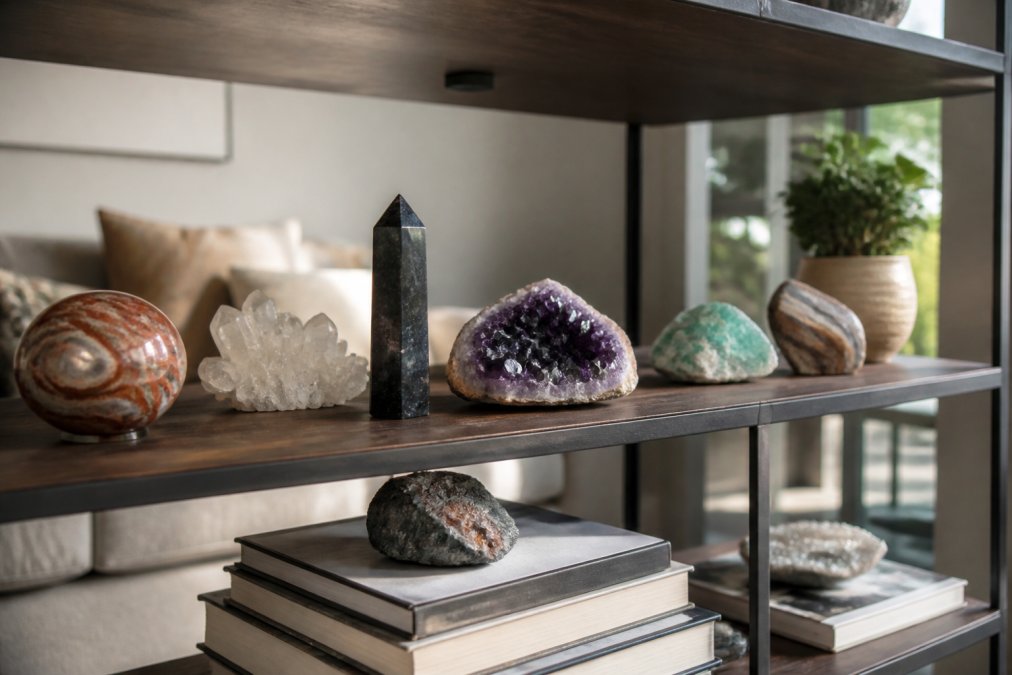
1. Scenic Jasper Crystal Sphere: A Landscape in Stone
Price: $120.99
This polished sphere captures what makes jasper collectible: natural landscape patterning that looks painted by hand. Desert tones, mossy inclusions, and dramatic seam features create a miniature world you can rotate and study from every angle.
The real value lies in the complexity of the veining and how light moves across the polished surface. For collectors seeking museum quality mineral specimens, this orb delivers the visual impact of a much larger piece in compact form.
2. Picture Jasper Cubes and Pairs: Mineral Art for Your Desk
Picture Jasper Cube: $49.99 | Picture Jasper Pair: $35.99

Picture jasper is the closest nature comes to abstract painting. The polished cube shows a different miniature landscape on each face; the matched pair of freeform slices offers a similar effect in a more organic shape.
These pieces are ideal for office decor or as a paperweight that sparks conversation. The cube's rich desert tones give it presence without overwhelming a workspace; the pair creates a balanced composition for shelves or console tables.
For those new to collecting, picture jasper is an accessible entry point: the patterns are immediately engaging, and the price point allows experimentation without a major commitment.
3. Calligraphy Jasper Towers: Statement Pieces with Ancient Script
Price: $69.99
Calligraphy jasper, also known as Script or Mariyam jasper, features intricate natural patterns resembling flowing script. Polished into a tall point, this tower displays rich earthy tones with each side revealing a unique design.

This is a genuine statement piece for home decor. The obelisk form gives it architectural presence, while the script-like markings invite close inspection.
Even ignoring the metaphysical properties, the visual complexity stands on its own. As a gift, it offers something far more personal than generic decor because no two pieces share the same pattern.
4. Fossil Coral Towers: Museum Quality Mineral Specimens with History
Polished Tower (9.5 inches): $75.00 | Natural Tower (8 inches): $90.00

Fossil coral is where geology becomes natural history. These towers showcase thousands of intricate fossilized coral formations, each naturally agatized over millions of years. The polished version features warm taupe, cream, and soft gray tones; the natural tower displays deep charcoal-gray with striking floral patterns.
These pieces belong in any discussion of authentic natural mineral specimens because they are literally ancient life preserved in stone. The agatization process replaced the original coral structure with silica, creating the detailed flower-like patterns visible on every surface.
For collectors focused on geological history, fossil coral offers a tangible connection to Earth's past that most crystals cannot match. The larger polished tower commands attention; the 8-inch natural point offers a darker, more dramatic aesthetic.
5. Raw Smoky Quartz and Titanium Aura Clusters: Natural Formations
Smoky Quartz Cluster: $64.00 | Titanium Aura Cluster: $99.99
This pairing shows the range within curated mineral specimens for sale: raw and unpolished versus enhanced and iridescent. The smoky quartz cluster features dense dark brown translucent points on natural matrix, completely unpolished. The titanium aura cluster has been treated with a vapor deposition process that creates brilliant rainbow iridescence.
Raw smoky quartz appeals to purists who value specimens exactly as they formed. The titanium aura treatment adds a metallic sheen that transforms the piece into a bold display object. Both are legitimate, but they serve different collector preferences.
How to Identify Authentic Crystals Before You Buy
Authentication is not a single test; it is a layered process of visual inspection, physical testing, and documentation review. Top e-commerce pages rarely explain how to verify a specimen beyond trusting the seller.
Visual Inspection: What to Look For First
Start with the crystal's termination points. On a genuine quartz point, the faces meet at sharp, defined edges; glass imitations often have rounded edges under a 10x loupe. Natural growth lines, called striations, are nearly impossible to replicate in a mold.
Check for inclusions. Natural specimens frequently contain small fractures, fluid inclusions, or mineral veils. A piece that is perfectly clear with zero internal features is more likely to be synthetic or glass. The Federal Trade Commission's Guides for the Jewelry, Precious Metals, and Pewter Industries require that laboratory-created stones be clearly disclosed, so a seller offering flawless clarity without a synthetic label is a red flag.
The Physical Tests That Matter
- Weight and temperature: Genuine stone feels noticeably heavier than glass or resin of the same size. It also stays cool to the touch longer. Hold the piece in your palm for 30 seconds; if it warms to body temperature quickly, it is likely not a natural dense mineral.
- Scratch testing (with caution): Quartz has a Mohs hardness of 7. A genuine quartz point will scratch a steel knife blade or a piece of common glass. Do not perform this test on polished or valuable pieces, as it will damage the surface. Use this only on an inconspicuous base or matrix area.
- Magnification: A 10x loupe is the standard tool. Look for conchoidal fractures (shell-shaped breaks) that indicate natural breakage versus the smooth, uniform surfaces of a cast piece. Natural crystals show irregular, stepped growth patterns; fakes show repetitive, machine-like uniformity.
Grading Scales and What They Mean
There is no single universal grading system for mineral specimens, but the trade commonly references the following tiers, adapted from the Gemological Institute of America's clarity grading approach:
| Grade | Definition | Typical Price Impact |
|---|---|---|
| Collector Grade | Sharp terminations, undamaged faces, balanced composition, notable aesthetic appeal | Premium; often 2-3x specimen grade |
| Specimen Grade | Good crystal form with minor damage or incomplete termination; display-worthy | Standard market value |
| Decorative Grade | Damage, dull luster, or poor form; sold for mass or tumbled use | Discounted; not recommended for curated collections |
A seller who cannot articulate which grade their piece falls into, or who uses vague terms like "high quality" without specifics, is not offering curated service.
Documentation as an Authentication Tool
Reputable dealers maintain provenance records that include the mining locality, the date of acquisition, and the name of the previous owner if applicable. The International Mineralogical Association guidelines on specimen labeling emphasize that accurate locality data is part of ethical dealing. If a seller cannot name the specific mine or at least the region, treat the piece with skepticism.
The Treatment Disclosure Test
Treatments fall into three categories: mechanical (polishing, cutting), chemical (dyeing, oiling), and vapor deposition (titanium aura, iridescent coatings). Mechanical treatments are standard and expected. Chemical and vapor treatments must be disclosed under Federal Trade Commission's jewelry guides. If a listing shows vibrant, unnatural colors without a treatment note, that is a violation of trade rules and a clear sign to walk away.
A common pattern among lower-tier sellers is to photograph treated pieces in dim lighting to mask the coating's artificial sheen. Ask for a photo in natural daylight; treated pieces often show a metallic or rainbow reflection that shifts unnaturally as the angle changes.
Building Your Reference Library
The most effective way to spot fakes is to handle known genuine specimens. Visit a natural history museum with a mineral hall and study the reference pieces. The Smithsonian Institution's mineral sciences resources offer high-resolution photographs of authenticated specimens that show what natural termination, luster, and inclusion patterns actually look like. Compare those images side-by-side with any piece you are considering.
Authentication is a skill that improves with exposure. The more genuine pieces you handle, the faster your eye recognizes the subtle weight, texture, and light behavior that fakes cannot replicate. When in doubt, request a third-party lab certification for high-value purchases.
How to Start a Mineral Collection That Grows in Value
Building a collection that appreciates requires a strategy, not impulse purchases. The collectors who see the best long-term results follow a few consistent principles:
- Buy quality over quantity. One exceptional specimen outperforms ten mediocre ones in both display value and resale potential.
- Focus on a theme. Whether you prefer jasper landscapes, quartz formations, or fossil specimens, a cohesive collection tells a stronger story.
- Document provenance. Keep records of where each piece came from and when you acquired it. This matters for insurance and future resale.
- Learn to identify fakes. The Smithsonian Institution's mineral sciences resources offer excellent reference material on authentic mineral structures and common treatments.
For those wondering how to identify authentic crystals, start by handling known genuine specimens. The weight, temperature, and surface texture of real stone are difficult to replicate; glass imitations feel lighter and warmer.
The Care and Preservation Gap: What Most Collectors Never Learn
Every mineral dealer has seen the same tragedy: a beautiful specimen ruined by improper cleaning or display. Preservation is the single most important factor in whether a collection retains value over decades. A specimen damaged by poor care loses 50-80% of its market value instantly.
Cleaning: The Rules That Prevent Damage
Do not use water on porous stones. Calcite, selenite, malachite, and many zeolites are water-soluble or water-sensitive. Water can dissolve surface layers, dull luster, or cause structural weakness. The American Museum of Natural History's mineral care guidelines recommend dry cleaning methods for most specimens.
- Dusting: Use a soft, natural-bristle brush (a makeup brush or camera lens brush works well). Never use compressed air, it can blast loose crystal points off their matrix.
- Dry cleaning: For stubborn dust, use a soft brush with gentle, sweeping motions. For crevices, use a wooden toothpick or bamboo skewer wrapped in a tiny piece of microfiber cloth.
- When water is acceptable: Quartz, agate, and jasper are generally water-safe. Rinse briefly under lukewarm running water, then pat dry immediately with a soft cloth. Never soak specimens, as water can seep into matrix cracks and cause flaking.
- Never use soap or detergent. Residue builds up on crystal faces and dulls the natural luster over time. If a specimen has oily residue from handling, use a tiny amount of isopropyl alcohol on a cotton swab for spot cleaning only.
Storage and Display: Preventing Physical Damage
Sunlight is the silent killer. Direct sunlight fades amethyst, rose quartz, and many treated pieces. It also causes thermal expansion that can crack specimens with internal fractures. Display minerals away from south-facing windows or use UV-filtering glass.
Humidity control matters. High humidity causes oxidation on pyrite and marcasite, turning bright metallic surfaces into dull, powdery brown. Low humidity can cause some clays and zeolites to dehydrate and crack. The American Museum of Natural History's mineral care guidelines recommend stable humidity between 40-60% for most collections. In humid climates, add silica gel packets near pyrite specimens; in dry climates, avoid placing specimens near heating vents.
Stable display surfaces are non-negotiable. Tall towers and clusters are top-heavy. Use museum putty or a small felt pad with adhesive backing to secure the base. Never display fragile pieces on a shelf edge.
Handling: The Invisible Damage
Human skin oils are acidic and leave residues that attract dust and dull surfaces. Always handle specimens by their matrix or base, never by the crystal points. For small pieces, use cotton gloves or hold the specimen over a soft surface. A single drop can destroy years of value.
The Resale Reality: Condition Is Everything
When you eventually sell or trade pieces, the buyer's first question will be about condition. Chipped terminations, scratched faces, or faded color are permanent and immediately visible. A collection maintained with proper care commands premium prices; a neglected collection sells at liquidation rates. The American Museum of Natural History's mineral care guidelines emphasize that preventive care is far easier than restoration, which is rarely possible without devaluing the specimen.
| Collection Focus | Entry Price Point | Best For | Key Consideration |
|---|---|---|---|
| Picture Jasper | $35.99 - $49.99 | Desk decor, beginners | Patterns vary; buy exact piece shown |
| Jasper Towers | $69.99 | Statement home decor | Tall points need stable display surface |
| Fossil Coral | $75.00 - $90.00 | Natural history enthusiasts | Neutral tones fit most interiors |
| Quartz Clusters | $64.00 - $99.99 | Raw mineral purists | Smoky quartz is unpolished; aura is treated |
Starting a collection does not require deep expertise upfront. Begin with pieces that genuinely appeal to you, learn their geological context, and let your eye develop. What separates a collection that appreciates from one that disappoints is not the price tag, it is the discipline of proper care from the moment the specimen arrives at your door.
For those ready to begin, IG Crystal Archive, LLC offers hand-selected specimens with secure packaging and a 30-day free return policy, so you can buy with confidence knowing each piece is exactly what was pictured. Our curation process means you are choosing from pieces we have already vetted for quality and character. Get started with IG Crystal Archive and build a collection that reflects nature's finest work.
Frequently Asked Questions
How do I know these crystals are authentic and not treated or dyed?
Authenticity starts with clear labeling. For example, a titanium aura quartz cluster is naturally quartz that has been bonded with metal vapors, and a reputable seller will say so. Natural specimens like smoky quartz or picture jasper should show inclusions, color variations, and irregular features that are hallmarks of earth-mined material. Ask the seller for the specimen's source locality and close-up photos. A trusted curator will provide details on the stone's natural formation and any treatments applied.
What is the difference between a crystal and a mineral specimen?
A crystal is a single mineral with a defined geometric structure, like a quartz point. A mineral specimen is a larger piece of natural rock that may contain multiple crystals, matrix, or other minerals, such as a smoky quartz cluster on matrix. When you buy curated mineral specimens, you are often getting a display piece that shows the geological context of how the crystal formed, which adds scientific and aesthetic value.
Are mineral specimens a good investment?
High-quality, rare specimens with strong aesthetics and good provenance can appreciate in value, similar to fine art. Look for pieces that are 'museum quality' due to their size, clarity, or unique formations. However, the best investment is buying what you love. A curated collection that brings you joy and displays well holds its value in personal satisfaction, even if the market fluctuates.
How should I care for and display my mineral specimens?
Keep specimens out of direct sunlight to prevent color fading, especially for amethyst or aura quartz. Dust them gently with a soft brush or microfiber cloth. Avoid water on specimens with matrix or that are not fully polished. Display them on sturdy stands or shelves away from high-traffic areas to prevent chips. A stable environment with moderate humidity protects both the mineral's structure and its natural luster.