How to Spot Dyed Crystals Online: 7 Tests
Table of Contents
- Why Dyeing Is the Most Common Crystal Scam Online
-
The 7 Tests to Spot Dyed Crystals Before You Buy
- Test 1: Look for Color Concentration in Fractures and Pits
- Test 2: Examine the Drill Hole or Base for Color Bleed
- Test 3: Watch for Unnatural, Vibrant Color Saturation
- Test 4: Use the Acetone or Alcohol Swab Test
- Test 5: Check Surface Texture Under Magnification
- Test 6: Shine a UV Light on the Specimen
- Test 7: Compare Weight and Density to the Natural Mineral
- Common Dyed Crystals List: Varieties to Approach With Caution
- How to Identify Fake Crystals Online Using Photos
- Natural vs. Synthetic vs. Dyed: Know the Difference
- When to Seek Professional Lab Verification
- Ethical Sourcing: Why Dyed Stones Undermine the Market
- Final Checklist Before You Click Buy
- Frequently Asked Questions
Last Updated: September 6, 2026
Buying crystals online is a gamble. Sellers can enhance color, mask flaws, or pass off inexpensive materials as premium specimens, and the most common trick in the trade is dyeing. Learning how to spot dyed crystals online separates a genuine geological treasure from a cleverly colored piece of quartz. At IG Crystal Archive, LLC, we hand-select every specimen and carefully inspect each one for quality, so understanding these markers is central to how we curate our collection.
The good news is that you don't need a gemological lab to catch most fakes. A few simple tests, a keen eye, and some basic tools will help you identify the vast majority of dyed stones before you part with your money. This guide walks you through seven practical tests designed specifically for online buyers, from analyzing product photos to performing at-home chemical checks.
Why Dyeing Is the Most Common Crystal Scam Online
Dyeing is pervasive because it is cheap and effective. A low-grade, pale stone can be soaked in vibrant dye and sold as a rare, high-value specimen, multiplying its price many times over. Unlike synthetic growth, which requires specialized equipment, dyeing can be done in a home workshop with fabric dye and a pot of boiling water.
The practice exploits a knowledge gap. Many buyers focus on color first and authenticity second, assuming a beautiful hue signals a valuable mineral. Sellers bank on this assumption, knowing that a vivid blue "Howlite" or a deeply saturated "Turquoise" will outsell their natural, muted counterparts. This is why understanding how to spot dyed crystals online is not just about protecting your wallet; it is about preserving the integrity of the mineral market for serious collectors.
The 7 Tests to Spot Dyed Crystals Before You Buy
Each test below targets a specific way dye manifests on a stone. You won't need to run all seven on every purchase, but mastering them gives you a toolkit to evaluate any specimen with confidence. Start with the visual tests on the product photos, then move to physical tests once the stone is in your hands.
Test 1: Look for Color Concentration in Fractures and Pits
Natural crystals have consistent color that penetrates the entire structure. Dyed stones, however, show color pooling in surface imperfections. Examine close-up photos for fractures, pits, and porous areas where dye accumulates more heavily than the surrounding surface.
This "webbing" effect creates dark lines or blotches that trace the stone's internal cracks. A natural stone's color will flow through its structure uniformly, while dye collects in these low spots like paint settling into a scratch. If you see intense color concentrated in tiny fissures against a lighter background, you are likely looking at a dyed specimen.
Test 2: Examine the Drill Hole or Base for Color Bleed
For beads, pendants, and tumblestones, the drill hole is a telltale giveaway. Dye often fails to penetrate the entire stone, leaving a stark white or pale core visible inside the hole. Look for a sharp contrast between the vibrant exterior and the lighter interior.
A natural stone will show the same color throughout the drill hole as it does on the surface. Dye accumulation around the hole's rim, often appearing as a darker ring, is another strong indicator. This test is particularly effective for stones like Howlite dyed to imitate Turquoise, where the white interior is a dead giveaway. Extreme close-up of a crystal bead's drill hole showing concentrated dark blue dye residue against a lighter stone, held by tweezers over a pristine white surface 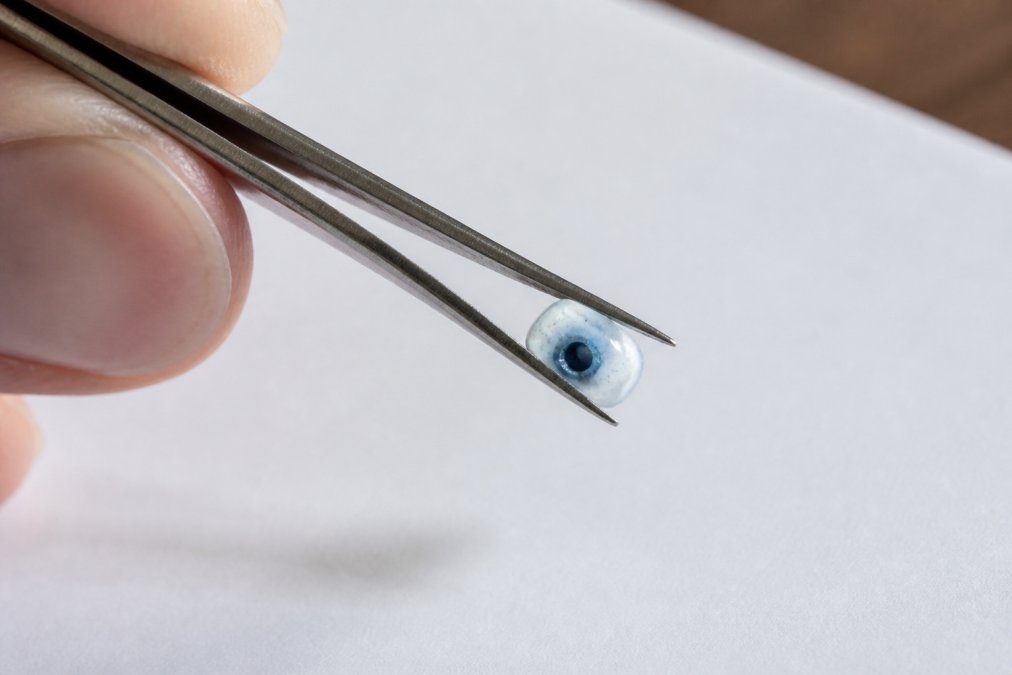
Test 3: Watch for Unnatural, Vibrant Color Saturation
Nature rarely produces neon colors. While some minerals like Kunzite or Apatite can be vividly saturated, most natural stones display earthy, muted, or pastel tones. If a crystal looks like it belongs in a candy store, treat it with suspicion.
This is a critical skill in learning how to spot dyed crystals online because photos are often color-enhanced to make the dye look more convincing. Compare the stone's color to known examples of the mineral. Ask yourself if the hue falls within the natural range for that species. If a "Lapis Lazuli" shows electric blue with no pyrite flecks, or a "Rose Quartz" is bubblegum pink, the color is likely artificial.
Test 4: Use the Acetone or Alcohol Swab Test
This is the definitive at-home test. Once you have the crystal, dip a white cotton swab in pure acetone or rubbing alcohol and firmly rub a small, inconspicuous area of the stone. If the swab picks up color, the stone is dyed.
Natural minerals will not bleed their color onto a swab (geology.com). This test works because acetone is a solvent that breaks down the resins and dyes used in the coloring process. For porous stones that have already been sealed, you may need to rub harder or use a gentle scratching tool to reach the dye beneath the sealant. This test is your most reliable confirmation.
Test 5: Check Surface Texture Under Magnification
A jeweler's loupe or a macro lens reveals the truth that the naked eye misses. Under magnification, look for an unnatural, glassy smoothness that indicates a resin or polymer coating used to seal in the dye. Natural stones typically show tiny pits, growth lines, and a slightly irregular surface texture.
Dye often sits on the surface in a way that creates a subtle color gradient or blotchiness under magnification. You may also spot tiny dye particles trapped in surface pores. This inspection helps you spot dyed crystals that have been cleverly sealed to pass the acetone test.
Test 6: Shine a UV Light on the Specimen
A longwave UV light can reveal surprising information about a stone's authenticity. Many dyed stones will fluoresce differently than their natural counterparts. For example, natural ruby often fluoresces a vivid red under UV light, while dyed imitations may show no fluorescence or a dull, chalky glow (gia.edu).
More importantly, some dyes and the resins used to set them will glow a milky white or bright blue under UV, which is a clear sign of artificial treatment. While a lack of fluorescence doesn't guarantee authenticity, an unexpected glow is a strong warning sign. Use this test in conjunction with others for a more complete picture.
Test 7: Compare Weight and Density to the Natural Mineral
This test requires a bit of knowledge about the specific mineral you are buying. Dyed stones are often cheaper, porous alternatives like Howlite, Magnesite, or dyed Quartz. These materials have a different density and weight than the high-value minerals they imitate.
For instance, a piece of dyed Howlite will feel noticeably lighter than a comparable piece of natural Turquoise. If you are familiar with how heavy a specific stone should feel in your hand, you can often spot a fake immediately. This is a practical skill that develops with experience handling genuine specimens.
Common Dyed Crystals List: Varieties to Approach With Caution
Certain crystals are dyed so frequently that you should assume they are treated until proven otherwise. This common dyed crystals list helps you identify fake crystals online by knowing which varieties are most at risk.
- Howlite and Magnesite: Almost always dyed to imitate Turquoise or Lapis Lazuli.
- Clear Quartz: Frequently dyed to create "Aura" crystals or imitation Amethyst and Citrine.
- Agate: Often dyed in bright pinks, blues, and greens, though natural bands should be visible.
- Crackle Quartz: Fractured and dyed to create colorful web-like patterns.
- Tigers Eye: Dyed in reds and blues to create "Dragon's Eye" varieties.
| Stone Type | Common Imitation | Key Red Flag |
|---|---|---|
| Howlite | Turquoise | White core visible in drill hole |
| Clear Quartz | Amethyst | Color concentrated at tip only |
| Agate | Various | Unnatural, candy-like colors |
| Magnesite | Lapis Lazuli | No pyrite inclusions, even color |
How to Identify Fake Crystals Online Using Photos
When you can't hold the stone, you must become a detective with the images provided. The first step to identify fake crystals online is to request multiple photos from different angles, including close-ups of any fractures or drill holes. Legitimate sellers will happily provide these; scammers often rely on blurry or single glamour shots.
Look at the background and lighting. A photo with harsh lighting can wash out color concentration, while a saturated filter can make a pale stone look vibrant. Examine the stone's surface for the "webbing" pattern mentioned earlier, and zoom in on any areas that look suspiciously glossy or coated. If the listing only shows the stone's best side, ask for a photo of the base.
Macro Photography Techniques for Remote Inspection
You can perform a pseudo-magnification test right on the product page. Download the highest-resolution photo available and zoom in on specific areas using your phone or computer. Look for pixel-level color shifts that reveal dye pooling.
A useful technique is to increase the contrast and saturation of the photo in a basic editor. This makes subtle color concentrations in fractures much more apparent. While not as reliable as a physical loupe, this digital trick can expose obvious dye jobs that are invisible in a standard view, helping you spot dyed crystals before you commit to a purchase.
Natural vs. Synthetic vs. Dyed: Know the Difference
Understanding these three categories is essential for any collector. A natural crystal grew in the earth over millennia. A synthetic crystal, like lab-grown cubic zirconia or hydrothermal quartz, has the same chemical composition and crystal structure as its natural counterpart but was created in a lab (mineralseducationcoalition.org). A dyed crystal is a natural (or sometimes synthetic) stone that has been artificially colored.
Dyeing is distinct from heat treatment, which is a widely accepted practice used to enhance or alter a stone's color permanently, such as turning amethyst into citrine. Dyeing, by contrast, is a surface-level treatment that can fade, bleed, or chip, and it is often used to deceive buyers into thinking they are purchasing a different, more valuable mineral. Knowing these differences helps you make informed choices about what you are willing to buy.
When to Seek Professional Lab Verification
The at-home tests cover most dyed stones, but some treatments are sophisticated. If you are investing in a high-value specimen, such as a large piece of natural Turquoise or a rare Ruby, professional verification is worth the cost. A gemological laboratory can use advanced testing to definitively determine a stone's origin and any treatments it has undergone.
These labs use tools like spectroscopy and advanced microscopy to detect dyes, resins, and other treatments that are invisible to the naked eye. While this service is an added expense, it provides a certificate of authenticity that adds significant value and peace of mind to your collection. For everyday purchases, the seven tests above are sufficient.
Ethical Sourcing: Why Dyed Stones Undermine the Market
The dyeing problem extends beyond individual buyer disappointment. It undermines the entire market for ethically sourced, natural minerals. When consumers are burned by a dyed stone sold at a premium, they become wary of all purchases, hurting honest dealers who invest time in sourcing and curating genuine specimens.
Supporting sellers who are transparent about their sourcing and treatments is crucial. A reputable dealer will tell you exactly where a stone came from and whether it has been treated. This transparency is a core value at IG Crystal Archive, LLC, where every specimen is personally chosen for its exceptional quality and natural beauty. Choosing authenticity over a bargain supports a market that values geological truth over artificial enhancement.
Final Checklist Before You Click Buy
Before you complete your purchase, run through this quick checklist to confirm you have done your due diligence on how to spot dyed crystals online.
- Request additional photos from the seller, including close-ups of the base and any drill holes.
- Look for price red flags: if a deal seems too good to be true, the stone is likely dyed or synthetic.
- Ask about treatments directly: a legitimate seller will disclose any dyeing or enhancements.
- Review the seller's return policy: a 30-day free return policy, like the one we offer, shows confidence in product quality.
- Trust your instincts: if the color looks unnatural or the seller is vague, walk away.
Buying crystals should be a joyful experience, not a source of anxiety. By mastering these seven tests, you equip yourself to shop with confidence, knowing you can spot dyed stones and select genuine pieces that will hold their beauty and value. At IG Crystal Archive, LLC, we are committed to that same standard, carefully inspecting each specimen so you can trust that what you see is what you get, a natural treasure chosen with intention. Explore our collection and find a piece that speaks to you, backed by our 30-day free returns and a mission that supports autistic adults and their families.
Frequently Asked Questions
How can you tell if a crystal is dyed?
Check for color concentration in fractures, pits, and drill holes. Dyed crystals show vivid color pooling in these areas rather than even distribution. Run a cotton swab dipped in acetone across the surface; dye transfers to the swab. Unnatural vibrant saturation and color webbing along surface textures also indicate dye. Compare the color to known natural specimens of the same mineral.
What are the most common crystals that are dyed?
Agate, howlite, quartz, and calcite top the list. Howlite is frequently dyed blue to imitate turquoise. Agate often receives bright pinks, purples, and greens. Cracked quartz gets vivid colors forced into fractures. Opalite and magnesite also appear in dyed forms. When a stone shows saturated neon colors that look unusual for the mineral, treat it as suspect.
Can I identify my crystal online for free?
You can get a strong preliminary answer using macro photos you take yourself. Photograph the piece under bright light, then zoom into fractures, drill holes, and surface textures. Compare those details against the visual red flags in this guide. Free identification forums exist, but photos often miss key details. For a definitive answer, professional gemological testing remains the most reliable route.
Are dyed crystals considered fake?
Most collectors distinguish dyed from outright fake. A dyed stone is a real mineral that has been artificially colored. The stone itself is natural, but the color is not. Sellers who fail to disclose dyeing misrepresent the piece. The ethical concern is disclosure: a properly labeled dyed agate is decorative; an unlabeled one sold as natural is a misrepresentation.