How to Store Your Crystal Collection Sustainably
Last Updated: October 30, 2026
Quick Summary
To store crystal collection pieces sustainably, use reusable containers such as glass jars, wooden boxes and felt-lined trays instead of single-use plastic. Protect each stone with a soft cloth, keep softer stones separate from harder ones, and store the collection away from direct sunlight. Choose containers you can reuse for years.
- Reused glass jars won't crush or warp and can be reused indefinitely if not dropped.
- Wrap each piece in a soft cloth before placing it in a container.
- Separate softer stones from harder ones to prevent scratches.
- Keep stones out of direct sun and heat on a stable shelf.
- Use washable cotton, felt or T-shirt scraps instead of bubble wrap or foam peanuts.
Table of Contents
- Why Storage Choices Matter for Crystals
- Choosing Reusable Storage Containers
- How to Store Crystals Safely Against Scratches and Damage
- DIY Crystal Storage Solutions Using Household Materials
- Storing Small Crystals and Crystal Jewelry
- Organizing Crystals and Gemstones as Your Collection Grows
- Start Your Sustainable Setup This Weekend
- Frequently Asked Questions
Storing a crystal collection sustainably comes down to two things: keeping the stones safe from scratches, dust and light, and choosing containers that you can reuse for years instead of replacing. Most crystal storage advice focuses only on protection, so it misses the waste that piles up when every new stone arrives in a fresh plastic box. A good storage setup can extend the life of a collection while keeping the household low-waste. This guide walks through practical, reusable options you can start with this weekend.
Why Storage Choices Matter for Crystals
Crystals are sturdy in some ways and fragile in others. Quartz and agate resist everyday knocks, but softer stones and polished surfaces can scratch when they rub against harder pieces. Dust builds up on exposed stones and dulls their shine. Prolonged direct sunlight can fade some specimens over time (Conservation Treatment of Gilmore the Flying Lion: Examination).
The storage you choose shapes all of these risks. A stone kept in a soft-lined container is protected from abrasion. A stone left on an open shelf is exposed to dust and bumps.
Storage also has an environmental side. Single-use plastic clamshells and bubble wrap are cheap, but they end up in landfill within months. Reusable containers cost a little more upfront and last for decades.
Watch out: Do not store softer stones in the same tray as harder ones without a divider. The harder piece will scratch the softer one over time.
Choosing Reusable Storage Containers
Start by thinking about what you already own. Many containers that would otherwise be thrown away work well for crystals. The sustainable choice is not always the newest or prettiest container, it is the one you can keep using for years without replacing it.
A Lifecycle Comparison of Common Storage Options
Before you buy or repurpose anything, compare options on the criteria that actually matter for a low-waste collection: durability, reusability, protection, upfront cost, and what happens at end of life.
| Option | Durability | Reusability | Protection | Typical Upfront Cost | End of Life |
|---|---|---|---|---|---|
| Reused glass jars | High, won't crush or warp | Indefinite if not dropped | Good; add a cloth liner | $0 if reused; $2-$8 new | Recyclable |
| Reused cardboard boxes | Low, weakens with humidity | A few years | Moderate; needs lining | $0 | Compostable or recyclable |
| Cotton or felt pouches | Moderate, seams wear | Years with washing | Good for individual stones | $3-$12 each | Compostable if natural fiber |
| Wooden boxes | High | Decades | Good; muffle light | $10-$40 | Repairable; compostable |
| Metal tins | High | Decades | Poor, can scratch; may react with moisture | $2-$10 | Recyclable |
| Display cases | High | Decades | Excellent | $30-$150+ | Recyclable or repairable |
Use this table as a starting point, not a rule. A reused jar that already exists in your kitchen has a lower footprint than a new display case, even if the case scores better on protection. The best option is the one that protects the stone and stays in service.
Repurposed Jars, Boxes and Dishes
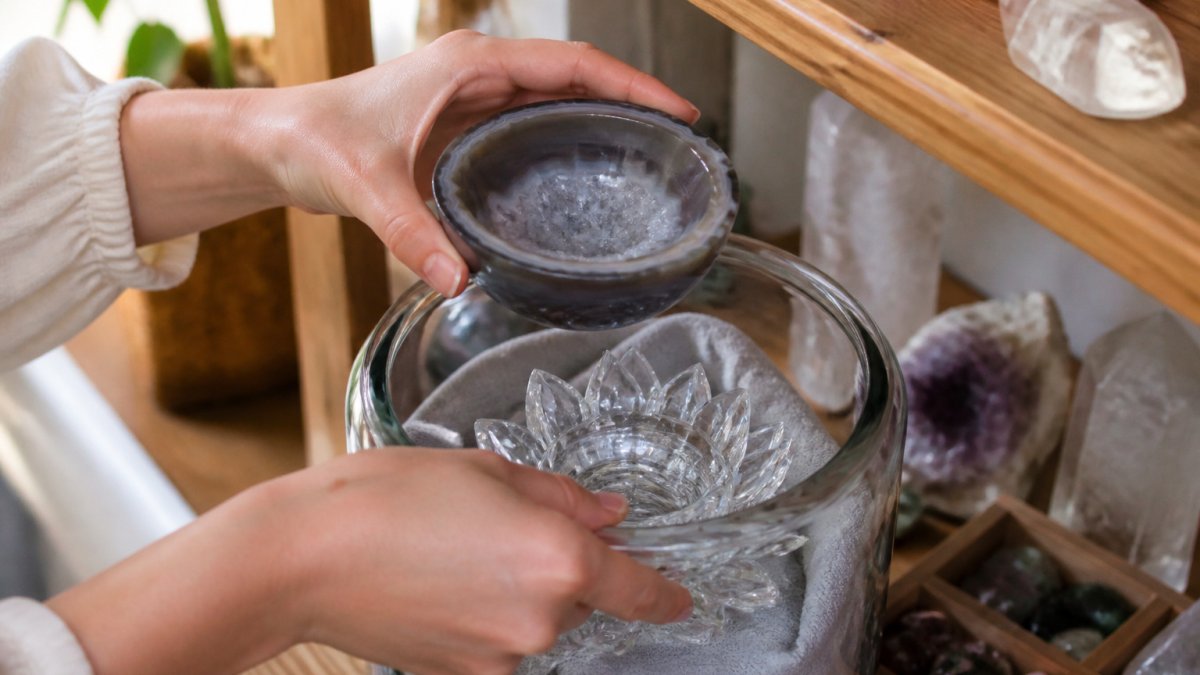
Glass jars, small wooden boxes and ceramic dishes make excellent crystal holders. Glass lets you see the collection at a glance, and it cleans easily. Wooden boxes add warmth and muffle light. Ceramic dishes work well for polished stones that you want to keep visible.
- Check the inside for sharp edges or residue that could scratch stones.
- Line the base with a soft cloth, felt or cotton batting.
- Match the container size to the stones so they do not roll around.
- Choose a lid or cover if dust is a concern in your space.
Our own display pieces can fill the same role if you want a finished look. The Natural Blue Gray Agate Bowl | Polished Crystal Stone Dish | One-of-a-Kind Gemstone Décor is a polished agate dish for small trinkets, priced at $34.99. The Natural Clear Quartz Lotus Bowl | 3.5” Carved Rock Crystal Flower Dish | Translucent Crystal Décor is a decorative carved quartz bowl, also $34.99.


Use this quick checklist when picking a container:
- Smooth interior with no sharp seams
- Soft lining in the base
- Room for each stone without crowding
- Lid or cover if the room gets dusty
- Material you can reuse or repair rather than replace
Materials to Avoid and Why
Some materials cause more harm than they prevent. Loose packing peanuts and rough cardboard can scratch polished surfaces. Metal containers can scratch stones and sometimes react with moisture. Thin plastic bags trap humidity around the stone and are rarely reused.
Stick with materials that are smooth, dry and inert. Natural cotton, felt, wood and glass all work well. If you must use plastic, choose a sturdy container you will keep, not a single-use clamshell.
How to Store Crystals Safely Against Scratches and Damage
Scratches are the most common storage problem. You can prevent most of them with a few simple habits.
- Wrap each piece in a soft cloth before placing it in a container.
- Separate stones by hardness. Keep softer stones away from harder ones.
- Avoid stacking heavy stones on top of delicate ones.
- Keep stones out of direct sun and heat. Store them on a stable shelf away from windows and heaters.
- Check on your collection every few months for loose pieces or dust.
For delicate points or small tumbles, a lined tray works best. Each stone sits in its own cup, so nothing rubs against its neighbor.
Natural Blue Gray Agate Bowl | Polished Crystal Stone Dish | One-of-a-Kind →
Watch out: Do not rely on newspaper alone. Ink can transfer to light-colored stones and newsprint can leave fibers behind.
DIY Crystal Storage Solutions Using Household Materials
You do not need to buy anything to get started. Many storage solutions are already in your home, and the right ones can protect fragile specimens without generating new waste.
Low-Waste Packing and Cushioning
Fragile points, soft stones and polished surfaces need cushioning, but disposable bubble wrap and foam peanuts end up in landfill quickly. Use washable or recycled alternatives instead:
- Cotton fabric scraps: Wrap individual stones or line tray cups. Wash and reuse.
- Felt offcuts: Cut to fit container bases and dividers. Felt holds up to repeated handling.
- Old T-shirts: Cut into strips for wrapping; the knit fabric is soft and lint-light.
- Shredded paper: Use plain, ink-free paper as loose fill. Avoid glossy or inked paper that can transfer color.
- Cork scraps: Good for dividers and bases; naturally moisture-resistant.
Avoid newspaper as a direct wrap. Ink can transfer to light-colored stones and newsprint leaves fibers behind. If you use paper as fill, keep it away from direct contact with polished surfaces.
Household Containers That Work
- Egg cartons: Each cup holds one small stone. Cardboard is compostable.
- Muffin tins: Each cup is a ready-made cradle for tumbles.
- Fabric scraps: Sew a few small pouches to hold individual pieces.
- Cardboard shoeboxes: Line with felt scraps and add dividers from cereal boxes.
These options cost nothing and create no new waste. Replace liners when they become dirty or worn. If a cardboard box starts to soften from humidity, move the stones to a sturdier container rather than adding more tape or plastic.
Labeling and Inventory Management
A growing collection is easier to keep sustainable when you know what you own. Labeling prevents duplicate purchases and helps you find pieces without unpacking everything.
- Label each container with the stone type, size or date acquired. Use removable labels so you can reuse the container later.
- Keep a simple inventory on paper or in a spreadsheet: name, type, size, storage location and any notes on fragility.
- Photograph each piece when it arrives. A photo log helps you confirm what you have before buying another stone.
- Plan space before you shop. Measure shelf and drawer space, then choose containers that fit. Buying a container that does not fit often leads to a second purchase.
Storing Small Crystals and Crystal Jewelry
Small crystals and crystal jewelry need extra care because they are easy to lose and easy to tangle.
- Store jewelry flat or hanging on a soft-lined rack so chains do not knot.
- Use small pouches or compartment boxes for individual loose stones.
- Keep jewelry away from loose stones, since pieces can scratch each other.
For display, a hanging or sphere holder keeps a single favorite piece visible and off the shelf. The Woodland Bear Crystal Sphere Holder | Rustic Tree Trunk Display Stand is a rustic stand for one crystal sphere (sphere not included), priced at $24.99. Pair it with the Hanging Crystal Sphere Display | Decorative Metal Stand | Rose Gold if you want a suspended look for a second piece.

Organizing Crystals and Gemstones as Your Collection Grows
A small collection is easy to keep track of. A larger one needs a system.
Start by sorting stones into groups, such as by type, size or color. Label each container so you can find a piece without unpacking everything. Keep a simple list of your store crystal collection, and update it when you add or sell a stone.
When space runs out, rotate displays. Keep a few favorites out and store the rest in labeled containers. For ideas on arranging more stones attractively, How to Display Crystals in Home: 7 Stylish Ideas walks through several layouts. If you are working with mineral specimens specifically, Best Ways to Display Mineral Specimens covers protective display choices.
Review the collection once a year. Remove anything you no longer want and reuse the containers.
Start Your Sustainable Setup This Weekend
You can begin with what you already have. Pick one container, add a soft liner, and sort your stones into groups. Next, check for scratches and move any soft stones away from hard ones. Over time, replace single-use packaging with reusable options as you need them.
A thoughtful setup protects your collection and keeps waste out of the bin. Start small, use what is in your home, and build from there.
Frequently Asked Questions
How should I store my crystal collection?
Store each crystal in its own compartment or a soft pouch so stones cannot knock together. Keep harder stones such as quartz separate from softer stones, since contact can leave scratches over time. Use shelves away from direct sunlight and heat, and check periodically for dust. Reusable containers like glass jars, small boxes lined with cotton or fabric scraps, and shallow dishes work well and avoid buying new plastic organizers. Label containers by stone type or size so you can find pieces without handling the whole collection.
Can I store crystals in recycled boxes or jars?
Yes. Clean glass jars, cardboard boxes, and small dishes are practical choices for crystal storage. Before using a cardboard box, make sure it is dry and free of odor, since moisture can damage cardboard over time. Line the bottom with a soft cloth or felt so pieces do not sit directly on rough surfaces. Avoid storing crystals in containers that trap humidity for long periods, and open lids occasionally to allow air circulation.
How do I protect small crystals and crystal jewelry in storage?
Small crystals and jewelry are easily lost or scratched when mixed together. Use a shallow tray with individual compartments, a lined jewelry box, or small pouches with drawstrings. Keep pieces with metal settings separate from raw stones to prevent scratching. Store delicate or softer stones in the most cushioned spot in the container. Reusing old jewelry boxes or egg cartons with cloth liners is a low-waste option that works well for small pieces.