Hand Selected Crystals for Gift Giving: A Buyer's Guide
Quick Summary
Hand selected crystals make better gifts because someone chose each piece with care rather than picking it at random. Every IG Crystal Archive specimen is hand-selected and inspected for quality, so the recipient receives something chosen with intention.
- Hand-selected pieces vary in color, banding, and inclusions, so no two are exactly alike.
- Check that a listing names the mineral species, not just a trade name.
- Look for disclosed treatments, since undisclosed heat or dye is a yellow flag.
- Choose versatile clear, white, or soft blue stones when unsure of the recipient's taste.
- Include a short care card stating the stone name and whether it is water-safe.
Table of Contents
- Why Hand Selected Crystals Make Better Gifts
- How to Identify High Quality Crystals Before You Buy
- Choosing a Crystal for the Person You're Gifting
- Meaningful Crystal Gifts for Beginners
- Where to Find Authentic Crystals You Can Trust
- Presenting, Cleansing, and Caring for a Crystal Gift
- Choosing Your Next Crystal Gift With IG Crystal Archive
- Frequently Asked Questions
Why Hand Selected Crystals Make Better Gifts
Last Updated: November 4, 2026
Hand selected crystals for gift giving work because someone chose each piece with care instead of pulling it off a shelf at random. At IG Crystal Archive, LLC, every specimen is hand-selected and carefully inspected for quality, so the person you're buying for receives something that was chosen with care.
A gift like this says something. It tells the recipient you noticed what they like, whether that's a soft milky quartz for a calm desk or a bold Tiger's Eye for someone who wears statement pieces. Mass-produced accessories rarely carry that kind of intention.
Hand-selected pieces also tend to be more distinctive. Natural stones vary in color, banding, and inclusions, so no two are exactly alike. That variation is part of the appeal, and it makes the gift feel personal rather than generic.
How to Identify High Quality Crystals Before You Buy
Quality in a hand-selected crystal comes down to three things: what the stone actually is, how it was finished, and whether the seller is telling you the truth about both. Our guide to why hand-selected minerals are better explains how careful selection affects what you receive. Most buyers focus only on the first and skip the other two.
Start with the stone itself. A reputable listing names the mineral species, not just a trade name. "Blue calcite" is a species; "blue aura quartz" is a marketing label for quartz that has been bonded with titanium. Neither is inherently bad, but you deserve to know which you are buying. Look for the actual piece in the photos, not a stock image, and check for close-ups that show color, banding, surface finish, and natural inclusions. If the listing shows one blurry angle, ask for more before you order.
Understand treatments and enhancements. Many stones on the market are heat-treated, dyed, irradiated, or stabilized, and that is legal and common. Treatments that materially affect a gemstone's value are generally expected to be disclosed, so a listing that stays silent on treatment is a yellow flag (the FTC). Common examples: amethyst is frequently heat-treated to citrine, turquoise is often stabilized with resin, and howlite is routinely dyed blue to imitate turquoise. None of these are scams on their own, but undisclosed treatment is.
Check the finish and dimensions. Good listings describe whether a piece is polished, tumbled, or raw, and give approximate dimensions in inches or millimeters. For jewelry, look for bead size, clasp type, and length. Vague language like "beautiful healing stone" tells you little about what will arrive in the mail.
Ask about sourcing and inspection. A seller who hand-selects should be able to tell you where a stone was sourced and whether pieces are inspected for cracks, chips, or dye pooling. Sellers that stand behind their curation tend to answer these questions directly.
Watch out: Photos taken under warm studio lighting can make pale stones look saturated and hide surface fractures. Ask for a photo in natural daylight before you commit to a higher-priced piece.
Know the difference between beginners and collectors. A beginner gift can be a tumbled stone or a simple beaded bracelet; a collector gift usually means a specimen with documented locality, matrix, or crystal formation. If the recipient already owns crystals, ask the seller for a piece with a specific origin rather than a generic polished stone.
Before you buy, check these three areas, which the article covers in more detail below.
| Check | What to look for | Red flag |
|---|---|---|
| Stone identity | Named mineral species | Only a trade name |
| Treatments | Disclosed heat, dye or stabilization | Silence on treatment |
| Finish and size | Polished, tumbled or raw, with dimensions | Vague "healing stone" wording |
| Photos | Close-ups, natural daylight | One blurry angle or stock image |
| Sourcing | Origin and inspection described | No answer to sourcing questions |
Choosing a Crystal for the Person You're Gifting
Begin with what the recipient already wears, displays, or talks about. Someone who favors gold tones may prefer the warm honey shades of Tiger's Eye. Someone who likes cool, minimal style may lean toward white quartz.
Think about how the gift will be used. A bracelet gets worn daily, so durability and comfort matter. A necklace makes a quieter, more formal statement. A piece for a home office or bedside table suits someone who likes objects that catch the eye.
If you are unsure of their taste, choose a versatile color. Clear, white, and soft blue stones pair with most wardrobes and decor styles.
Meaningful Crystal Gifts for Beginners
Beginners often want a gift that is easy to wear and easy to understand. Our meaningful gift ideas for crystal lovers list more options that suit first-time buyers. A single bracelet in a familiar stone is a good starting point, because it requires no special knowledge to appreciate.
Natural White Quartz Beaded Necklace | Milky White Crystal Gemstone Necklace →
Our range includes several options that work well for first-time gift buyers:
- Natural White Quartz Beaded Necklace (from $34.99): a classic piece with a silver-tone clasp that layers easily with other jewelry.
- Natural Blue Calcite Bracelet (from $24.99): an oversized, stretch-style bracelet with soft blue-gray tones.
- Natural Jade Donut Pendant Necklace (from $19.99): a green jade disc on an adjustable black cord, with a red bead accent.
Pair any of these with a short card explaining why you chose the stone. The explanation often matters more to the recipient than the stone's traditional associations.
Where to Find Authentic Crystals You Can Trust
When comparing sellers, look for clear sourcing details, real customer feedback, and a straightforward return policy. Our returns include 30-day free returns, which gives buyers room to make sure a piece fits their expectations.
Buyers who want to research further can read our guide on Authentic Crystal Shopping for Beginners and our roundup of Best Online Shops for High Quality Minerals to compare options before deciding.
Customer feedback reflects what buyers value. One customer noted, "My crystal arrived exactly as pictured and was even more stunning in person." Another said, "The quality is incredible, and shipping was fast."
Presenting, Cleansing, and Caring for a Crystal Gift
Presentation makes a difference, but the part most gift guides skip is what happens after the box is opened. A short care card tucked in with the piece turns a nice gift into a useful one, and it takes about five minutes to write.
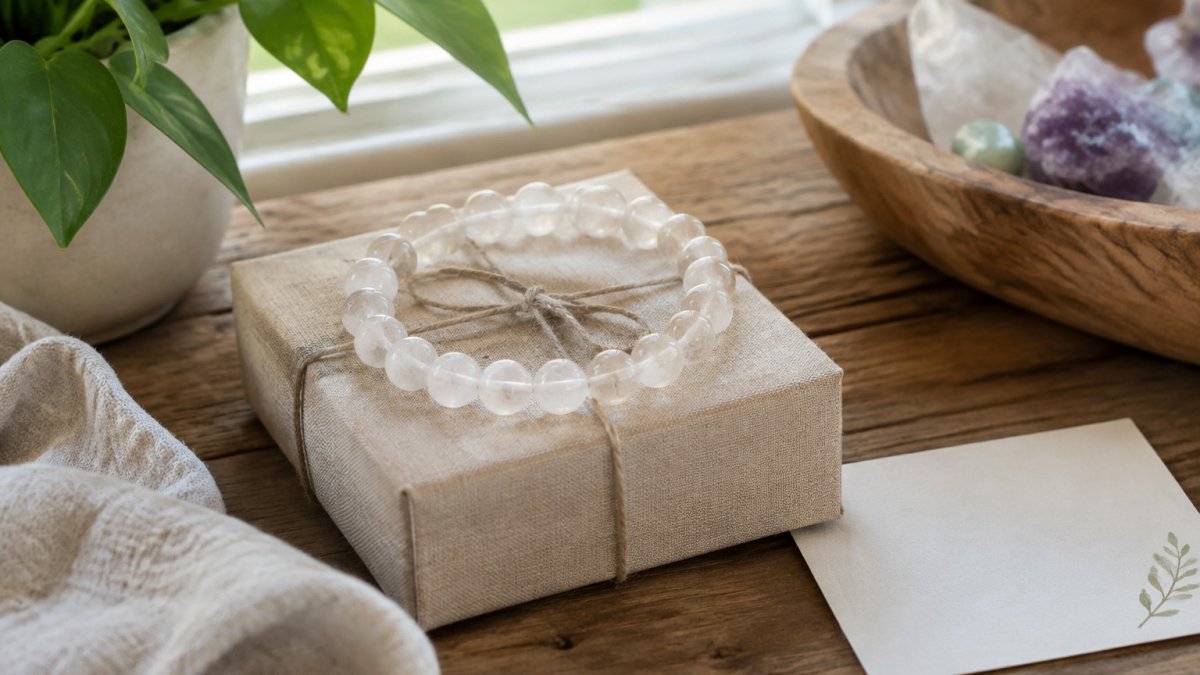
Presentation. Wrap the piece in a small pouch or tissue paper, add a handwritten note, and include one line about why you chose it. If the stone has a traditional association the recipient might appreciate, say so briefly; if not, describe the color or texture that made you think of them.
Cleansing. Many people like to cleanse crystals before giving or wearing them. A gentle rinse with water, or a few minutes in indirect sunlight, is a common approach. Watch out: some stones should not go in water at all. Selenite, halite, and malachite can dissolve, soften, or degrade when soaked, and porous stones can trap moisture. For those, use a dry method such as a soft brush or a few minutes near a quartz cluster instead. Avoid prolonged exposure to strong sun, since amethyst, rose quartz, and citrine can fade over time, and keep harsh chemicals away from any piece.
Storage. Store jewelry away from other hard stones to prevent scratches. Keep bracelets and necklaces in a soft-lined box when not worn, and store raw specimens on a padded shelf rather than loose in a drawer where they can chip.
A simple care card to include. Write four lines on an index card: the stone name, how to clean it (water-safe or dry-only), how to store it, and one sentence on what makes that particular piece distinctive. Recipients keep cards like this, and it gives the gift a second life after the wrapping paper is gone.
Long-term maintenance. Silver-tone clasps and chains can tarnish over time; a soft polishing cloth is a gentle way to restore shine. Stretch bracelets should be rolled on and off rather than pulled, which extends the life of the elastic. For raw specimens, dust with a dry microfiber cloth rather than rinsing, since water can leave mineral streaks as it dries.
Choosing Your Next Crystal Gift With IG Crystal Archive
Choosing a crystal gift comes down to knowing the recipient, understanding what makes a piece well chosen, and buying from a seller who explains its selection. At IG Crystal Archive, LLC, we hand-select each piece, inspect it for quality, and ship it in secure, professional packaging.
Ready to find the right piece? Visit our collection and start with the bracelets or necklaces that match the recipient's style. Shop Crystals
Frequently Asked Questions
How do I know if a crystal is authentic?
Start with the seller's description: a reputable shop should name the specific mineral, state whether the stone is natural, and describe any treatment or dyeing. Look for natural inclusions, uneven color, and slight variation between pieces, since perfectly uniform color and glassy perfection often signal dyed glass or imitation stone. Ask whether each piece is inspected individually. Sellers who check and photograph the actual item you receive are easier to trust than those who show only stock images. If a listing is vague about origin or treatment, ask before you buy.
What should I look for when buying crystals as a gift?
Choose a stone whose appearance suits the recipient's taste and home. Check that the piece matches its photos, confirm the size, and read the return policy in case it arrives different from what you expected. Packaging matters too, since a crystal that arrives chipped or loose defeats the purpose of a thoughtful gift. Buying from a seller that offers 30-day free returns gives you room to correct a mismatched choice, which is especially useful when you are shopping for someone else.
Are hand-selected crystals better than mass-produced ones?
Hand-selected crystals are chosen one at a time for quality, color, and natural character, while mass-produced stones are sorted in bulk and often look nearly identical. A hand-selected piece is chosen individually, which is the kind of attention that supports quality. For a gift, that individual attention usually shows in the finished result, and the recipient receives something that feels personal rather than generic.
Do crystals need to be cleansed before being given as a gift?
Many people cleanse a crystal before gifting it, often by rinsing it briefly in cool running water and letting it air dry, or by placing it in natural light for a while. Whether you do this is a personal choice tied to your own practice. If you do cleanse, mention it in the card so the recipient knows, and keep water exposure in mind for softer stones such as selenite or calcite, which can be damaged by moisture.