How to Cleanse and Charge New Crystals Safely
Last Updated: November 4, 2026
Quick Summary
To cleanse and charge new crystals safely, start with the gentlest method that suits the stone's hardness and water tolerance, such as a cool water rinse, smoke, or sound, then dry it fully. Charge the stone overnight in moonlight or on a selenite slab, and set one clear present-tense intention before charging.
- Wipe new stones with a dry soft cloth to remove dust and packing residue first.
- Ten to fifteen minutes is plenty for a first cleanse.
- Water-soluble stones like selenite will pit and cloud if soaked, so use smoke or sound.
- Place stones where moonlight reaches them and bring them in before sunrise.
- Daily-wear jewelry should be cleansed weekly and charged monthly.
Table of Contents
- Why New Crystals Need Cleansing and Charging
- How to Cleanse Crystals for the First Time
- How to Charge Crystals in Moonlight
- Setting Intention Before You Charge
- How Often to Cleanse Crystals
- Storing, Displaying, and Passing Crystals On
- Choosing a Crystal Worth Cleansing
- Frequently Asked Questions
Why New Crystals Need Cleansing and Charging
New crystals travel through mines, warehouses, shipping boxes, and retail shelves before reaching your hands. Many collectors want to reset a stone before it joins a collection, and learning how to cleanse and charge new crystals is the first skill worth mastering.
Even carefully selected stones benefit from a gentle first cleanse at home to start a relationship with the stone on your own terms.
What Cleansing Removes and What Charging Adds
Cleansing clears what collectors call energetic residue: the accumulated "noise" a stone picks up from handling and storage. Charging refills it. Cleansing wipes the slate clean; charging writes a fresh intention onto it.
The Metaphysical View and the Mineralogical View
- Metaphysical view: crystals hold and direct subtle energy. Cleansing restores balance; charging sets purpose.
- Mineralogical view: crystals are stable chemical structures. Some dissolve in water, fade in sun, or scratch easily.
The practical takeaway: respect the stone's physical limits first. A cleansing method that damages a specimen defeats its purpose.
How to Cleanse Crystals for the First Time
If you are learning how to cleanse crystals for the first time, start with the gentlest method and work up. Most new specimens need only cool water, a soft cloth, and a few quiet minutes.
- Wipe the surface. Use a dry, soft cloth to remove dust and packing residue.
- Choose a method that suits the stone's hardness and water tolerance.
- Set a short timer. Ten to fifteen minutes is plenty for a first cleanse.
- Dry fully. Pat the stone dry and let it air out before storing or charging.
- Note what worked. Keep a small log of each stone's needs.
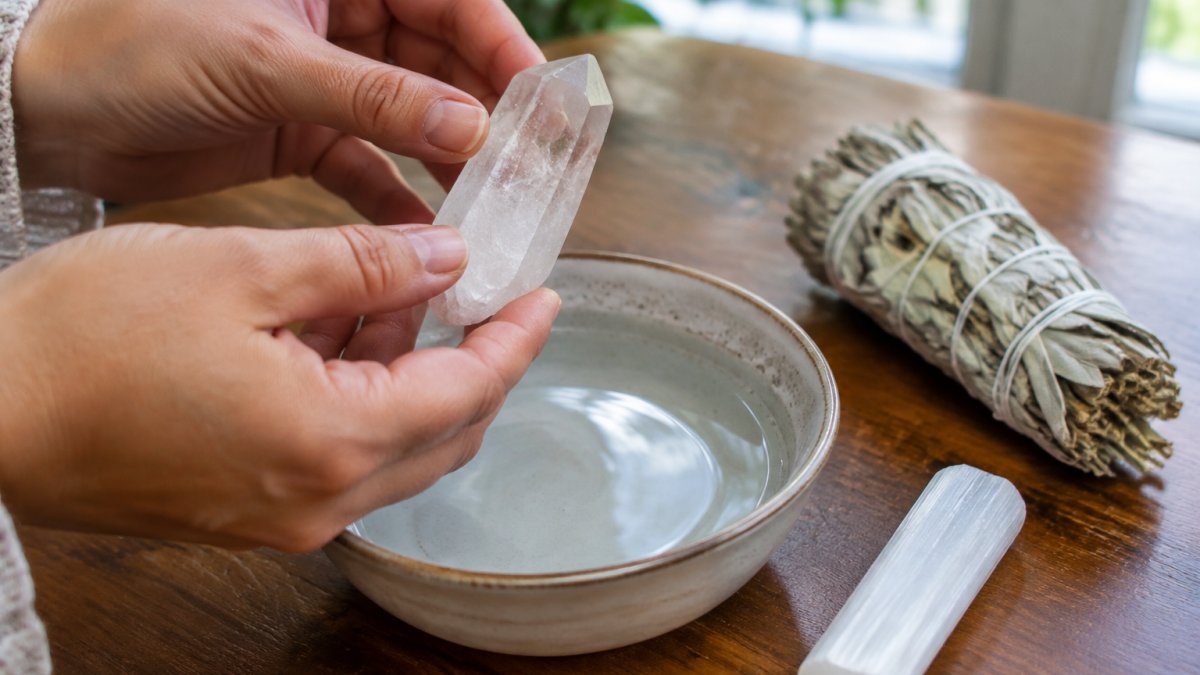
Water, Salt, Smoke, Sound, and Earth: Picking a Method
Each method suits different stones and different collectors. Here is how they compare.
| Method | Best For | Watch Out For | Time Needed |
|---|---|---|---|
| Cool water rinse | Hard, water-safe stones | Soft or porous minerals | 5-10 minutes |
| Sea salt or salt water | Durable quartz family | Salt can scratch soft surfaces | 10-15 minutes |
| Smoke (sage, incense) | Almost any dry stone | Smoke stains porous pieces | 2-5 minutes |
| Sound (singing bowls, bells) | Delicate or water-soluble stones | Needs a quiet space | 5-10 minutes |
| Earth burial | Grounding, gentle reset | Moist soil and lost pieces | 24 hours |
A common mistake is dunking every new stone in salt water. Salt is abrasive and can dull a polished surface or creep into fine cracks. Check the stone's hardness first.
The Crystal Safety Matrix: What Not to Use on What
Keep this matrix handy before you cleanse anything new.
| Crystal Type | Water | Salt | Sunlight | Safest Method |
|---|---|---|---|---|
| Clear quartz, amethyst | Yes | Yes | Short only | Water or smoke |
| Selenite, halite | No | No | Yes | Smoke or sound |
| Pyrite, hematite | No | No | Yes | Dry wipe or sound |
| Malachite, azurite | No | No | No | Smoke or sound |
| Opal, turquoise | No | No | No | Sound or dry cloth |
| Polished agate, jasper | Yes | Yes | Yes | Water or smoke |
Watch out: water-soluble stones like selenite will pit and cloud if soaked. One rinse can permanently damage a piece you cannot replace.
How to Charge Crystals in Moonlight
To charge crystals in moonlight, place them near a window or outdoors during a full moon and leave them overnight. Moonlight is generally considered gentle, so many collectors use it for a wide range of stones, including water-sensitive ones.
- Place stones on a clean cloth or display dish.
- Set them where moonlight actually reaches them, not behind glass if you can avoid it.
- Leave them out from dusk until morning.
Moon water is a related practice: some collectors set a bowl of water under the full moon, then use it to mist or rinse hardy stones. Skip the mist on porous pieces.
Sunlight Charging and Its Risks
Sunlight charges quickly, and that speed is the problem. Long exposure fades amethyst, rose quartz, and many dyed or treated stones. Keep sun sessions short, and never leave a colored stone on a sunny sill all day.
Selenite, Grids, and Other Charging Supports
Selenite is the workhorse of most crystal collections. Many collectors rest smaller stones on a selenite slab or stick to recharge them between moon cycles. Keep selenite dry and store it away from harder stones.
Crystal grids combine several stones in a pattern to hold an intention. Our guide to crystals that cannot be together walks through safe pairings for grids and charging setups.
Setting Intention Before You Charge
Intention setting is what separates charging from simply leaving a rock on a windowsill. Before you charge a stone, decide what you want it to support. Hold the stone, breathe, and state that purpose in one clear sentence. The charge then amplifies a specific aim rather than a vague hope.
- Keep it short. One sentence beats a paragraph; a single clear aim is easier to work with than five competing goals.
- Use present tense. "I am calm and grounded" lands better than "I hope to be calm."
- Be specific but not rigid. "I stay focused during long work sessions" gives the stone a job. "Make me rich" does not.
Why Intention Works: Two Lenses
- The metaphysical lens: a crystal is treated as a focus for attention and a holder of directed energy. The intention tells the stone what to hold, and the charge reinforces it.
- The psychological lens: the ritual of holding a stone, breathing, and stating a goal is a form of implementation intention, a well-documented habit-building technique pairing a specific cue with a desired behavior. The stone becomes the cue, giving you a physical reminder of a goal you have already articulated.
Neither lens cancels the other. Many collectors hold both at once, and the result is the same: a stone with a clear, written intention is easier to use consistently than one charged with nothing in mind.
A Repeatable Programming Sequence
- Cleanse first. Set intention only on a stone that has already been cleansed, so new purpose is not layered over old residue.
- Hold the stone in your dominant hand. Close your eyes and take three slow breaths.
- State the intention aloud in one present-tense sentence. Speaking it aloud is more memorable than thinking it.
- Name the cue. Decide when and where the stone will remind you of the intention, such as wearing it during work hours or keeping it on a desk.
- Charge the stone using a method the mineral tolerates, such as moonlight, sound, or a selenite slab.
- Record the date, the intention, and the cue in your log.
Watch out: charging a stone with an intention it cannot physically support is a common beginner error. Never charge a soft, water-soluble stone like selenite by soaking, and never charge a colored stone in long direct sun. Check the safety matrix before choosing a charging method.
Revising and Releasing an Intention
Intentions have seasons. A stone programmed for a job search may not suit you once the job is found. When an intention no longer fits, cleanse the stone and program it again with a new sentence.
Natural Blue Gray Agate Bowl | Polished Crystal Stone Dish | One-of-a-Kind →
If you work with several stones, keep intentions from competing: assign one clear aim per stone and store stones with different aims apart, so the cues stay distinct.
How Often to Cleanse Crystals
Most collectors ask how often to cleanse crystals, and the honest answer is: it depends on use, handling, and storage. A stone you wear daily picks up more residue than one behind glass. Rather than follow a single calendar, build a rhythm around how each piece lives.
- Daily-wear jewelry: cleanse weekly, charge monthly.
- Display pieces: cleanse and charge each full moon.
- Stones used in healing or ritual work: cleanse after every session.
Signs Your Crystal Needs Cleansing
A schedule is a backup, not a substitute for observation. Many collectors find that a stone signals its own need if you know what to look for. Watch for these signs:
- A dull or heavy feeling in the hand. The most commonly cited signal, and usually the first one collectors notice.
- Visible surface film. Oils from skin, dust, and packing residue leave a film that dulls luster and, in the metaphysical view, clouds the stone's energy.
- A change in how the stone feels against the skin. Jewelry that suddenly feels irritating or "off" often just needs a wipe and a short cleanse.
Watch out: a stone that looks physically dirty needs cleaning, not just cleansing. Remove dust, fingerprints, and packing residue with a soft dry cloth or a method approved for that mineral before any energetic practice, because a film left in place will keep the stone looking dull no matter how often you cleanse it.
Matching Frequency to Method
How often you cleanse also depends on method. Gentle methods like sound, smoke, and moonlight can be repeated as often as you like. Aggressive methods like salt, salt water, and direct sun carry cumulative risk, so space them out and use them only on stones that tolerate them.
- Sound and smoke: safe to repeat daily on almost any dry stone.
- Moonlight: safe nightly; the full moon is a convenient anchor, not a requirement.
- Cool water: fine weekly for hard, water-safe stones; skip entirely for porous or water-soluble pieces.
A Simple Tracking Habit
A small log removes the guesswork. Note the date, the method, and how the stone felt before and after. After a few months, patterns emerge: some stones need weekly attention, while others stay bright for a full lunar cycle. The log also helps you avoid over-cleansing, since salt and sun can strip polish, color, or surface detail over time.
If a stone feels dull even after a cleanse, the issue may be physical rather than energetic. Our guide on how to clean raw minerals safely at home covers deeper physical cleaning for pieces that have accumulated grime, and our article on how to store your crystal collection sustainably explains how storage choices affect how often a stone needs attention.
Storing, Displaying, and Passing Crystals On
Storage protects everything you just did. Soft stones scratch easily, sunlight fades color, and damp air damages porous minerals. Keep your cleansed and charged pieces in a dry, shaded spot, ideally on a soft surface.
- Store soft stones like selenite apart from harder ones.
- Keep colored or treated pieces out of direct sun.
- Use a dedicated dish or bowl for stones you handle often.
For a deeper look at long-term care, our guide on how to store your crystal collection sustainably covers display and storage in more detail. A beautiful vessel helps too: our natural clear quartz lotus bowl makes a safe, elegant home for a small collection or a meaningful gift.

Passing crystals on carries its own weight. When you gift a stone, cleanse it first and share its story. A specimen with a known origin and a clear intention means far more than a loose stone in a bag.
Choosing a Crystal Worth Cleansing
Not every stone deserves your time. Before you invest in cleansing and charging, make sure the specimen is worth the effort.
- Natural inclusions and veining rather than uniform color
- No obvious dye pooling in cracks
- Accurate photos and clear descriptions
If you are new to collecting, our guide on how to spot a low-quality mineral specimen walks through the red flags in detail.
At IG Crystal Archive, LLC, every specimen is hand-selected and inspected before it ships.
Cleansing and charging a new crystal is a small ritual many collectors value.
Ready to find a specimen worth the ritual?
Frequently Asked Questions
How do I cleanse and charge my crystals for the first time?
Start with the gentlest method that suits the stone. Rinse water-safe crystals briefly under running water, then dry them fully. For soft or water-soluble pieces like selenite or halite, use smoke or sound instead. Once clean, set a clear intention, then charge overnight under a full or waxing moon or on a selenite plate. Keep the first session simple: one cleanse, one intention, one night of charging. Note what you did so you can repeat it.
Can I use water to cleanse all types of crystals?
No. Water damages more stones than most guides admit. Halite, sylvite, and other salt-based minerals dissolve outright. Selenite, gypsum, malachite, azurite, and angelite soften, crack, or lose their polish. Pyrite and marcasite rust. Hematite can leave rust marks. Water-safe stones include quartz, amethyst, clear quartz, rose quartz, and agate. For everything else, use smoke, sound, or a dry salt bed where the stone never touches the salt directly.
How often should I cleanse and charge my crystals?
There is no fixed schedule, and anyone who gives you an exact number is guessing. A practical rhythm: cleanse a new crystal before first use, then repeat monthly for pieces you handle daily, and quarterly for display-only specimens. Cleanse immediately after any intense emotional period, after a piece has been handled by many people, or when it looks dull and dusty. Physical cleaning with a soft dry cloth matters as much as the ritual.
Do all crystals need to be cleansed and charged?
Every new crystal benefits from at least a physical clean. Pieces shipped from a warehouse carry dust, packing residue, and handling oils, so a soft dry cloth or a brief water rinse is worthwhile regardless of your beliefs. The energetic cleansing and charging step is a personal practice, not a requirement. If you collect purely for display or mineral interest, skip the ritual and focus on safe handling, stable humidity, and keeping pieces out of direct sun where colors can fade.