9 Collectible Crystal Specimens Worth Adding to Your Collection
Quick Summary
Collectible crystal specimens are naturally grown mineral samples, usually kept in their original form, valued for natural formation, clean condition and visual distinctiveness. Clusters, points and geodes that formed in the earth are generally more sought after than tumbled or heavily shaped stones.
- Three factors shape most collector decisions: natural formation, condition and size.
- Clear quartz, amethyst and smoky quartz are the safest beginner choices with hardness of 7.
- Hardness below 5 means a specimen scratches easily and should be handled sparingly.
- Ask the seller whether a piece is natural or treated, and whether any crystals were repaired.
- Display specimens away from direct, prolonged sunlight, since some color-bearing minerals can fade.
Table of Contents
- What Makes a Crystal Specimen Collectible
- Best Crystals for Beginner Mineral Collectors
- Collectible Specimens in IG Crystal Archive's Current Lineup
- How to Identify Mineral Specimens Before You Buy
- Provenance, Treatments and Authenticity Checks
- Crystal Specimen Display Ideas and Care
- How to Start a Mineral Collection With Your First Piece
- Frequently Asked Questions
What Makes a Crystal Specimen Collectible
Last Updated: October 29, 2026
Collectible crystal specimens are not defined by price alone. A collector looks for natural formation, clean condition and a piece that stands apart from the next one on the shelf. Most of the value comes from how the stone was made, not how it was cut or polished.
A specimen is a naturally grown mineral sample, usually kept in its original form. Clusters, points and geodes that formed in the earth are generally more sought after than tumbled or heavily shaped stones. Collectors tend to value pieces that show the geological process that produced them.
Natural Formation, Condition and Size
Three factors shape most collector decisions: how the crystals grew, how intact they are, and how large the formation is. Strong terminations on quartz points, a clean matrix and visible crystal faces all signal a well-formed piece. Chips, repairs or heavy surface damage lower its appeal.
Size matters, but not in a simple way. A small specimen with sharp, well-spaced points can be more interesting than a large one with crowded, damaged growth. Check whether the formation reads clearly from several angles before deciding.
Best Crystals for Beginner Mineral Collectors
Beginners do best with specimens that are visually striking, durable, easy to identify, and widely available at accessible prices. The table below compares beginner-friendly options on the factors that matter most for a first purchase: how hard the mineral is, how easy it is to find, how forgiving it is to handle, and what a typical entry-level piece costs.
| Specimen | Hardness (Mohs) | Availability | Handling Notes | Typical Entry Price |
|---|---|---|---|---|
| Clear quartz | 7 | Very common | Durable; chips at edges if dropped | $15-$60 |
| Amethyst cluster | 7 | Common | Fades in prolonged direct sun | $25-$90 |
| Smoky quartz | 7 | Common | Stable color; good for shelves | $30-$80 |
| Pyrite | 6-6.5 | Common | Tarnishes in humid air; avoid washing | $20-$70 |
| Fluorite | 4 | Common | Soft; scratches easily; keep dust-free | $25-$85 |
| Calcite | 3 | Common | Very soft; avoid acidic cleaners | $15-$60 |
| Malachite | 3.5-4 | Less common | Soft and porous; never soak | $40-$160 |
| Garnet (raw) | 6.5-7.5 | Moderate | Durable; small pieces are affordable | $20-$75 |
A few practical rules follow from that table. Hardness below 5 means the specimen scratches easily and should be handled sparingly; hardness of 7 or higher tolerates normal display handling. Minerals that tarnish or fade, pyrite, amethyst, and some fluorite, belong away from humid bathrooms and direct sun. Porous or soft copper minerals such as malachite should never be soaked or scrubbed.
Quartz varieties remain the safest starting point because they are widely available, show clear crystal structure, and tolerate normal handling. The Clear Quartz Tower with Golden Inclusions & Rainbows ($89.00) is one example of a single piece with several visual features. Copper-based minerals are a good second step because their color is distinctive and easy to recognize, but their softness means they demand more careful storage.
Keep the first purchase manageable so you can learn what you like before expanding. A practical pattern is to buy one durable quartz piece, one softer color mineral, and one metallic or matrix specimen, that trio teaches you how hardness, color, and matrix affect both appearance and care.
Collectible Specimens in IG Crystal Archive's Current Lineup
IG Crystal Archive, LLC hand-selects each piece in its current lineup. The examples below are drawn from that catalog, so each price is the listed price.
Quartz Varieties: Smoky, Clear and Titanium Aura
The Natural Smoky Quartz Crystal Cluster ($64.00) features dark brown translucent points with glossy terminations on a natural matrix. The Titanium Aura Quartz Cluster ($99.99) has iridescent rainbow flashes and a druzy surface, making it a bold display piece. Each varies in finish, so the choice depends on whether you prefer natural tones or metallic shimmer.
Copper Minerals and Epidote: Malachite, Azurite and Epidote
The Natural Malachite Botryoidal Mineral Specimen ($159.00) shows rounded, textured growth in deep green. The Natural Azurite with Malachite Freeform ($89.99) combines cobalt blue and green in one piece. The Natural Epidote Crystal Cluster ($40.00) offers dark green prismatic crystals on a golden-brown matrix at the most accessible price in this group.
How to Identify Mineral Specimens Before You Buy
Identification starts before you look at a listing. Build a short reference set from a reputable mineral source, color, luster, crystal habit, cleavage, and typical matrix, then compare each candidate piece against it. Note whether the crystals are glossy, dull, or translucent, and whether the points are sharp, rounded, or fibrous. Those observations narrow the mineral family quickly.
Natural Pyrite Crystal Druzy Freeform | Metallic Cubic Crystal Cluster →
Use this buying checklist for every specimen:
- Mineral name and verification. Ask the seller for the mineral name and whether identification was verified. IG Crystal Archive notes that its malachite identification is based on appearance and supplier information and has not been independently laboratory verified. Treat any listing that claims more certainty than the seller can document with caution.
- Natural versus treated. Ask directly whether the piece is natural or has been treated. Titanium Aura quartz, for example, is a treated quartz, and the listing says so openly. Coatings, dyes, and heat treatment are common in the market; a seller who discloses them is easier to trust.
- Repairs and restoration. Ask whether any crystal has been reattached, glued, or stabilized. Repairs are not automatically disqualifying, but they should be disclosed and reflected in price.
- Condition. Check for chips, bruises, and heavy surface damage, especially on terminations and edges. Compare the photos against the described condition.
- Locality and provenance. Ask where the specimen was mined. A named locality with documentation supports both authenticity and resale value; an unnamed origin is a reason to ask more questions.
- Value factors. Rarity, size, aesthetics, condition, and locality drive price. A specimen that is rare, well-formed, undamaged, and from a documented locality commands more than a common, repaired, or unattributed piece of similar size.
Watch for surfaces that look unnaturally uniform, colors that seem too bright, or prices far below comparable pieces. Those signs are worth a closer look before purchase. When in doubt, request additional photos in natural light and ask for the seller's return policy.
Provenance, Treatments and Authenticity Checks
Provenance, meaning where a specimen was mined and how it was handled, is one of the hardest things for buyers to verify. Ask whether a piece is natural or has been treated. Titanium Aura quartz, for example, is a treated quartz, and the listing says so openly.
Watch for surfaces that look unnaturally uniform, colors that seem too bright, or prices far below comparable pieces. Those signs are worth a closer look before purchase.
Crystal Specimen Display Ideas and Care
Display specimens away from direct, prolonged sunlight, since some color-bearing minerals can fade.
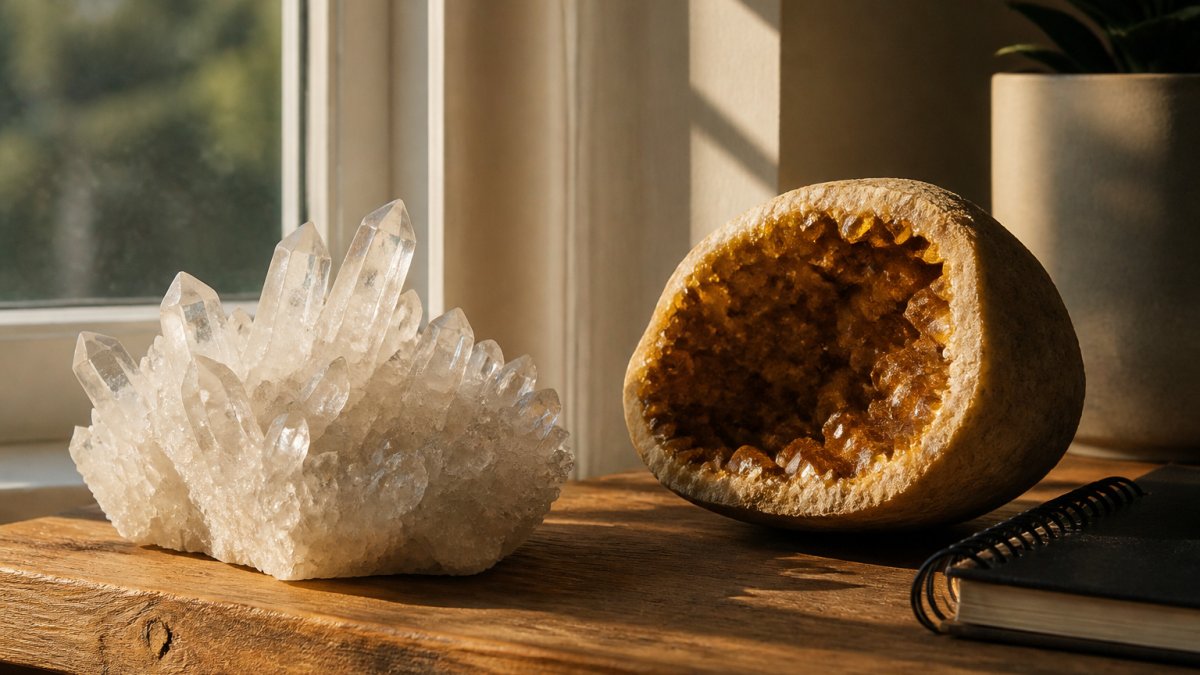
A raw quartz cluster and a golden-toned geode resting on a wooden shelf make an effective arrangement. Group pieces by color or mineral type to make the collection easier to read at a glance.
How to Start a Mineral Collection With Your First Piece
Choose one specimen you genuinely like, learn its features, and record where it came from and what you paid. Then add pieces that teach you something new, such as a different mineral family or a different formation style.
For a fuller walkthrough, see our Beginner Guide to Collecting Geological Specimens and How to Start a Mineral Collection: A Beginner's Guide. Before buying, our Crystal Identification Guide: How to Identify Any Stone can help you tell specimens apart, and our Authentic Crystal Shopping for Beginners: 2026 Guide covers authenticity checks in more depth. For a curated starting point, see Curated Mineral Specimens for Sale: 2026 Collector's Guide.
Frequently Asked Questions
What makes a crystal specimen collectible?
A crystal specimen becomes collectible when it combines natural formation, good condition and a distinctive look. Collectors pay attention to crystal terminations, clarity, color saturation and whether the matrix (the host rock the crystals grow from) is intact. Size matters too, but a well-formed small cluster often outranks a larger piece with damage or uneven growth. Natural, unpolished pieces are generally valued for their authenticity, while polished pieces are chosen more for display. Look for specimens where every crystal is undamaged and the formation is unusual or visually striking.
Which crystal specimens are best for beginner mineral collectors?
Beginners do best starting with durable, widely available minerals such as quartz, smoky quartz and malachite. The Natural Smoky Quartz Crystal Cluster in IG Crystal Archive's lineup is priced at $64.00. Celestite and epidote are also good learning pieces because their color and crystal habit are distinctive. Start with one or two pieces in a single mineral type so you can compare how formations differ.
How do you tell if a mineral specimen is high quality?
Check the crystal points for sharpness and clean terminations, examine the surface for chips or repaired areas, and confirm the specimen is natural rather than dyed or coated. Good specimens show consistent color and transparency where expected, along with the matrix showing how the crystals grew. Ask the seller whether the piece is natural, treated or stabilized, and request clear photographs from several angles. A reputable seller will describe any inclusions, surface texture or natural variations plainly rather than hiding them.
How should crystal specimens be stored and displayed?
Display specimens away from direct sunlight, since prolonged exposure can fade some colors, and keep them out of high-humidity areas if the mineral is water-soluble or fragile. Use a stable stand or shelf so the piece cannot tip, and handle heavier specimens with both hands. Label each piece with its name, source and purchase date.
Shop Crystals with IG Crystal Archive, LLC for hand-selected specimens, careful inspection and secure, professional packaging. Every order is backed by 30-day free returns.